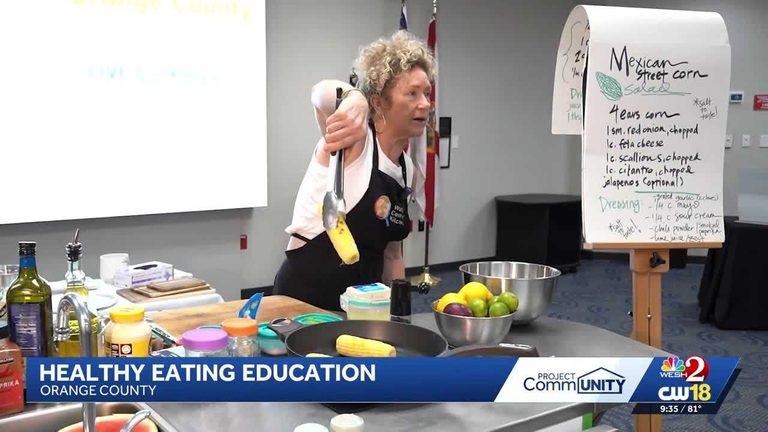
Orange County, Fla. – Volunteers Brad Jones and Erin Turner are using the Florida Department of Health’s outdoor space in Orange County to bring practical nutrition education to families. The pair have created a garden that demonstrates how to grow peanuts, carrots, bananas and other produce, then pairs those lessons with simple cooking classes using items from the department’s food pantry.
Hands‑on learning in the garden
Jones, a retired Orlando firefighter, walks visitors through the peanut‑growing process, explaining, “These are looking for the ground to bury, and once they get buried, they start to form little peanuts on the end of them.” He pulls a mature plant from the soil and shows the harvested peanuts, prompting amazement from onlookers.
Turner adds a culinary component, preparing inexpensive meals with pantry ingredients. “We are using really simple ingredients,” she says. “It does not have to be expensive, and that is really part of the message.” The classes emphasize that healthy meals can be affordable and accessible.
Engaging parents and children
Both volunteers note the impact on children who may be unfamiliar with fresh vegetables. Jones recalls a parent’s hesitation about carrots, only to see kids pull the vegetables from the soil and eat them on the spot. “I had 50 kids pull carrots. It may not change the world, but it changes a kid’s perspective on carrots,” he remarks.
Turner’s cooking demonstrations reinforce the garden’s lessons, showing families how to turn garden harvests into tasty dishes. The volunteers stress that the garden is an extension of the health department’s mission, turning the landscape into a living classroom.
Composting and sustainability
Beyond planting and cooking, the volunteers teach composting practices. Jones explains that nutrient‑rich material from the compost pile is returned to the garden rather than discarded, reinforcing a cycle of sustainability.
“I’m not going to put this in the dumpster because there’s all kinds of nutrients still in this,” he says, highlighting the importance of waste reduction and soil health.
Community impact
The garden has become a gathering place for families, health‑department staff and volunteers alike. Turner notes the simplicity and low cost of the program, aiming to empower parents to replicate healthy meals at home.
“One of the best parts is seeing people’s reaction when they come up,” Turner says. “They’re like, ‘Oh, wow, look at those bananas!’” The volunteers hope the experience will inspire lasting dietary changes and strengthen community ties.
Through hands‑on gardening, cooking lessons and compost education, Jones and Turner are fostering a healthier, more informed Orange County community—one plant, one recipe, and one family at a time.
Original reporting: WESH Orlando — read the source article.