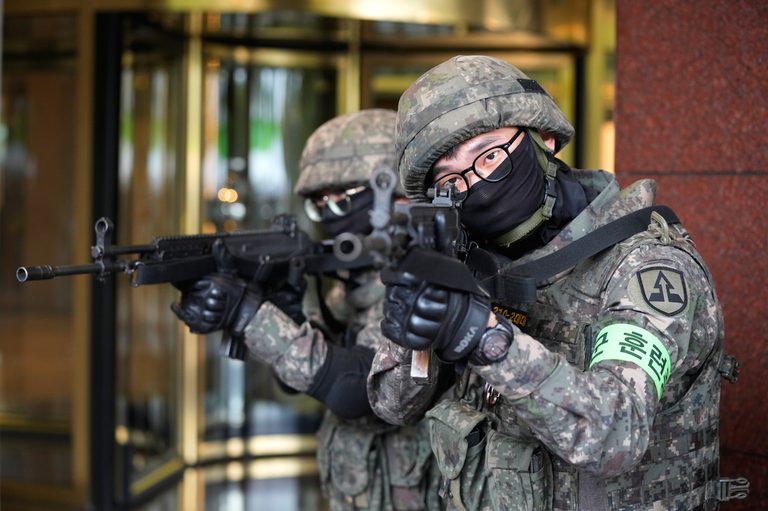
In a rare display of diplomatic signaling, the United States and South Korea wrapped up their annual Ulchi Freedom Shield military exercises on Friday, six days earlier than planned. The decision came after President Donald Trump instructed the Pentagon to substantially reduce the scope of the drills, citing a personal rapport with North Korean leader Kim Jong Un and South Korea’s reluctance to back the United States in the war in Iran.
North Korea’s response
One day after the drills were shortened, North Korea fired roughly ten short‑range ballistic missiles toward the sea, fulfilling a prior threat to respond to what it calls an invasion rehearsal. The missiles caused no reported injuries or damage to U.S. or allied territory, and U.S. Pacific Command said the launches did not pose an immediate threat to the United States or its regional partners.
Kim Yo Jong’s stance
Kim Yo Jong, the sister of Kim Jong Un, dismissed the United States’ gesture as inadequate, stating that the “provocative, aggressive nature of the drills” would not be altered merely by reducing their duration and size. While she used more measured language than usual, she reiterated that a personal relationship between her brother and President Trump could not drive North Korean‑U.S. relations forward.
Diplomatic backdrop
The early termination of the exercises dampened hopes for a swift resumption of talks between Trump and Kim Jong Un. Their previous nuclear diplomacy collapsed in 2019, and Kim Jong Un has since leveraged his nuclear and missile modernization to gain leverage, aligning more closely with Russia amid its war in Ukraine. He has indicated he will not return to negotiations unless the United States drops its demand for North Korean denuclearization as a precondition.
Strategic considerations
Analysts note that North Korea’s missile launch may be a strategic play to extract greater concessions from Washington, such as formal recognition as a nuclear state and broader sanctions relief. Professor Leif‑Eric Easley of Ewha University suggested the timing could be linked to the upcoming U.S. midterm elections, when President Trump might seek headline‑grabbing foreign‑policy moves.
Regional implications
North Korea’s growing ties with Russia, including the supply of ammunition and troops, provide it with additional leverage to request support from China, its largest trading partner. The United States reaffirmed its commitment to defend the homeland and its allies in the region, even as it scales back the joint drills.
What the drill reduction means for readiness
Ulchi Freedom Shield is a cornerstone of the U.S.–South Korean partnership, designed to improve joint readiness against potential North Korean aggression. Critics of the reduction warn that it could affect the combined forces’ ability to respond swiftly to any future threats.
Original reporting: KTSA News/Talk (San Antonio) — read the source article.