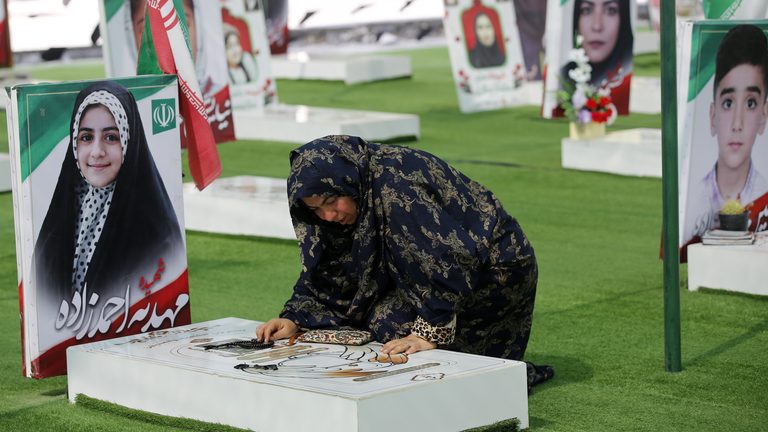
The United Nations Human Rights Council appointed a fact‑finding mission in 2022 to investigate alleged violations in the ongoing conflict between the United States, Israel and Iran. The panel, chaired by Bangladeshi jurist Sara Hossain, released a report Thursday that says it has “reasonable grounds” to believe the United States committed war crimes in two February 2024 airstrikes, one of which struck the Shajareh Tayyebeh school in the southern city of Minab.
Findings of the U.N. Mission
The experts say the school was a “clearly identifiable” target and that the strike was not an errant hit or collateral damage from an attack on a nearby Revolutionary Guard compound. According to the report, the attack killed at least 178 civilians, including women and children, and the United Nations panel concluded the United States launched “indiscriminate” attacks that resulted in civilian loss of life and damage to civilian objects.
A second strike, involving Precision Strike Missiles that dispersed tungsten pellets over a sports complex and residential area in the city of Lamerd, is also cited. The U.N. team says 22 civilian men and women were killed in that attack, though U.S. Central Command has denied responsibility.
Trump Administration Response
The Trump administration has not yet released the findings of its own Pentagon investigation into the Minab school bombing, nor has it formally accepted responsibility for the incidents. The White House has indicated that it will review the U.N. report and respond in due course, emphasizing that any U.S. action was taken in accordance with international law and the need to protect American allies.
In a statement, the State Department said it is “committed to a thorough and transparent review of all relevant facts” and that the United States remains “dedicated to upholding the highest standards of conduct in armed conflict.”
Broader Context of the Conflict
The report also documents extensive human‑rights violations by Iran’s theocratic government, describing “crimes against humanity” such as mass killings, torture, arbitrary arrests of healthcare workers, and an intensified use of the death penalty. The U.N. team cites more than 70 individuals, including five women and three boys, who face imminent risk of execution.
Both the United States and Iran are urged to halt all rights violations and to provide full reparations to victims, according to the panel’s recommendations.
Methodology and Sources
The 13‑member mission based its conclusions on interviews with 73 individuals inside and outside Iran, satellite imagery, photographic and video evidence, and documentation from credible organizations and experts. The team noted that the conflict has hampered information‑gathering, with many requests for data from both Tehran and Washington going unanswered.
While the U.N. report is not legally binding, it adds to the growing body of international evidence that could be used in future judicial proceedings.
What This Means for the American Public
For families and faith‑based communities across the United States, the allegations raise important questions about the conduct of our armed forces and the moral responsibilities of a nation that champions liberty and the sanctity of life. The Trump administration’s forthcoming response will be closely watched by policymakers, veterans’ groups, and religious leaders who seek assurance that any wrongdoing is addressed transparently and that American values are upheld on the world stage.
Original reporting: Richardson, TX News (HLL/CB) — read the source article.