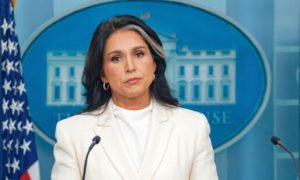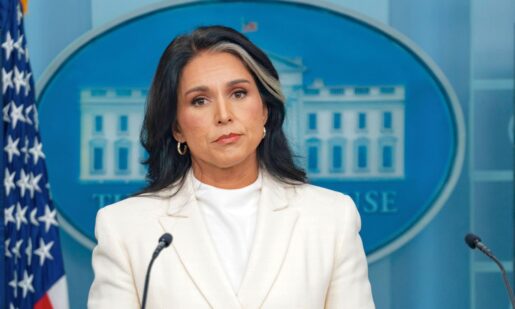
Tulsi Gabbard has announced her resignation as the U.S. director of national intelligence, effective June 30, 2026. Her decision comes as she steps away to support her husband, Abraham Williams, who has been diagnosed with a rare form of bone cancer. Gabbard expressed her gratitude for the trust placed in her by President Donald Trump during her tenure.
Gabbard’s resignation follows a period marked by internal conflicts within the administration. Reports indicate that she was often sidelined during significant national security discussions, particularly those involving Iran and Venezuela. Her relationship with other administration officials, including CIA Director John Ratcliffe, was reportedly strained.
Internal Conflicts and Resignation
According to sources, President Trump had considered replacing Gabbard, as she never fully integrated into his inner circle. Her stance on military interventions, which she shared with former National Counterterrorism Center Director Joe Kent, often put her at odds with the administration’s policies. Both Gabbard and Kent, military veterans, opposed U.S. military actions overseas, including recent operations against Iran.
Gabbard’s appearance at congressional intelligence hearings, following Kent’s resignation, fueled further speculation about her future in the administration. Kent had resigned in protest against military action in Iran, citing the lack of an imminent threat.
Gabbard’s Political Journey
Before her role in the Trump administration, Gabbard served as a Democratic congresswoman and was a presidential candidate. Throughout her career, she has been a vocal critic of U.S. military involvement in foreign conflicts, including those in Iraq, Afghanistan, Libya, and Syria. Her resignation marks the fourth departure from Trump’s Cabinet, following former Attorney General Pam Bondi, former Homeland Security Secretary Kristi Noem, and Labor Secretary Lori Chavez.
Original reporting: The Dallas Express — read the source article.