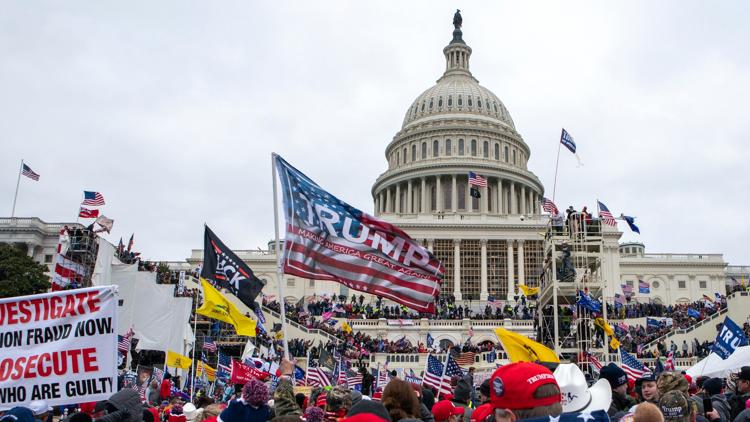
A new fund established by former President Donald Trump to support individuals involved in the January 6 protests at the Capitol is facing significant legal and political challenges. The $1.776 billion fund aims to compensate those who claim to be victims of a weaponized government, yet a federal judge in Virginia has temporarily frozen its establishment.
Controversy and Criticism
Critics argue that the fund is an attempt to rewrite the history of January 6 and reward Trump’s supporters who were involved in the breach of the Capitol. Despite this, some individuals, like David Johnston from South Carolina, are eager to help others apply for payouts, taking a 10% cut of any award. Johnston, who was previously sentenced to jail for his involvement, believes the narrative around January 6 is changing.
Others, like Jason Riddle, a military veteran from New Hampshire, have publicly rejected both a pardon from Trump and any compensation from the fund, stating that accepting money would be morally wrong. Riddle emphasizes that the actions on January 6 were criminal, not politically persecuted.
Legal and Political Challenges
The fund’s future is uncertain as it faces lawsuits and a lack of an established application process. Acting Attorney General Todd Blanche has stated that the fund’s commissioners will decide eligibility based on various factors, but these commissioners have yet to be named. Additionally, Senate Republicans are considering placing restrictions on the fund as part of a Department of Homeland Security spending bill.
Meanwhile, individuals like Pamela Hemphill from Oregon, who blames Trump for her legal troubles, have drafted claims for compensation. Hemphill, who served jail time, seeks $5 million from the fund, arguing that Trump’s false claims about the 2020 election led to her participation in the protests.
Broader Implications
The establishment of this fund is seen by some as part of a broader effort by Trump to undermine democratic institutions and recast the events of January 6. Brendan Ballou, a former prosecutor, has sued on behalf of police officers who defended the Capitol, viewing the fund as an attempt to condone the actions of that day.
As legal proceedings continue, the fund remains a contentious issue, with its future and impact on the narrative of January 6 still to be determined.
Original reporting: KGW Portland — read the source article.