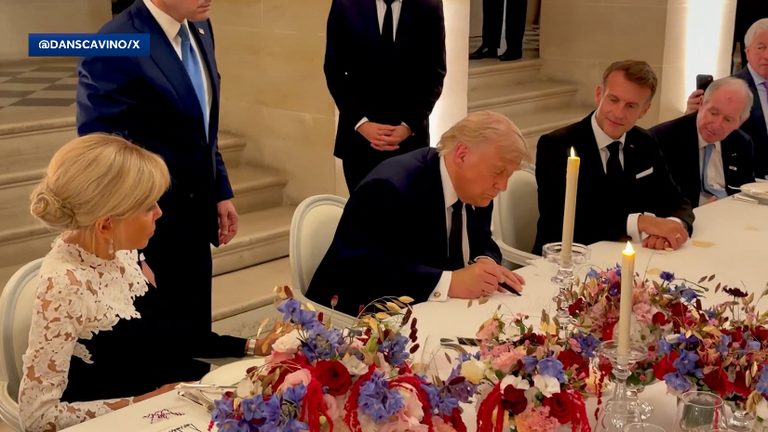
President Donald Trump signed a memorandum of understanding with Iran at the G7 summit, initiating negotiations to reopen the Strait of Hormuz and address Tehran’s nuclear program. The agreement sets the stage for new negotiations to reopen the Strait of Hormuz and address Tehran’s nuclear program.
What does the memorandum include?
The memorandum includes provisions to allow Iran to sell oil freely, lift the U.S. blockade of Iranian ports, and waive — but not eliminate — some sanctions. It also proposes a $300 billion development fund to rebuild Iran, which President Trump said would be financed by other countries, not the U.S.
President Trump stated, ‘It’s a memorandum of understanding. If it doesn’t get done in 60 days, that’s alright. We go back to our previous stance, but we might have to because we’re never going to let them have a nuclear weapon.’ A few hours later, Trump clarified that the 60-day timeline is not a hard deadline and he would be open to extending it. ‘As long as they’re behaving, I really don’t care that much,’ Trump told reporters.
Comparison to the 2015 Joint Comprehensive Plan of Action
The JCPOA took more than 18 months to negotiate during the Obama administration. The agreement severely limited Iran’s nuclear program over a period of 15 years. During this time, Iran agreed to limit its uranium enrichment, which can be used to build a nuclear weapon. It also enabled inspections in exchange for relaxed economic sanctions. Trump pulled the U.S. out of the deal in his first term in 2018, even calling it ‘the worst deal ever negotiated.’ The question with the ‘Memorandum of Understanding’ and the next 60 days is whether the president can win stricter limits on Iran’s nuclear program over a longer period of time.
Original reporting: WLKY Louisville — read the source article.