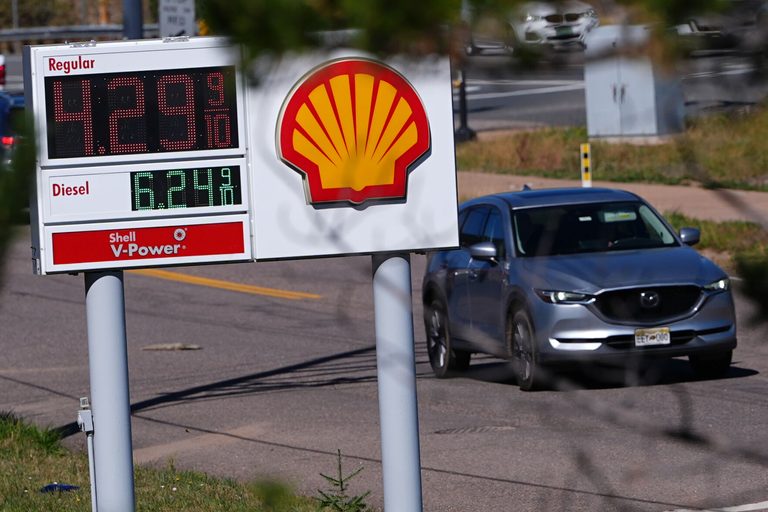
In a bold move to address soaring diesel costs, President Trump announced Friday a bilateral agreement with Russian President Vladimir Putin to increase U.S. diesel supplies. The pact calls for an initial shipment of more than 300,000 tons of diesel, followed by 500,000 tons in November and a further 4 million tons later in the year.
Why the deal matters for American families
Diesel fuels a vast portion of the nation’s freight network, from long‑haul trucks to farm equipment. Higher diesel prices have already pushed grocery bills higher, as perishable foods such as meat and produce must be hauled more frequently. By securing additional diesel, the administration hopes to give truckers, ranchers and farmers a breather at the pump, especially as the country heads into the November midterm elections.
Expert view: modest relief, not a price‑crash
Energy policy experts, however, warn that the influx will likely produce only a “tiny dip” in regional markets. Michael Lynch, distinguished fellow at the Energy Policy Research Foundation, likened the effort to “shuffling deck chairs on the Titanic,” noting that Russian diesel will simply replace existing supplies for other customers, leaving overall prices largely unchanged.
Daniel Sternoff of the Columbia Center on Global Energy Policy added that global refining capacity remains constrained, especially after disruptions in the Strait of Hormuz due to the ongoing U.S.–Iran conflict. “Refined products like diesel are still barely half of pre‑war levels,” he said, suggesting that any additional Russian diesel will only marginally ease price pressure.
Strategic benefit for Russia
While the deal may not dramatically lower U.S. pump prices, it does provide a revenue lifeline for Russia. Energy strategist Clayton Seigle of the Center for Strategic and International Studies explained that Russia is seeking to offload its summer‑grade diesel to make room for heavier winter grades needed later in the year. The agreement therefore helps Moscow mitigate a revenue squeeze without fundamentally altering global market dynamics.
Administration’s rationale
President Trump emphasized the practical benefits for American consumers, stating that the agreement “puts more diesel in the hands of our farmers and truckers when they need it most.” He framed the deal as a direct response to the record‑high diesel price of $6.53 per gallon recorded on September 22, according to AAA, and the near‑doubling of the average price from the same time last year.
The White House argues that even a modest increase in supply can create localized price relief, especially in high‑demand corridors such as the New York‑New Jersey area and parts of the Mid‑Atlantic. By acting swiftly, the administration seeks to demonstrate proactive leadership on energy costs ahead of the upcoming elections.
What’s next?
Analysts will be watching the first shipments closely to gauge any price movement in regional markets. If the diesel arrives as scheduled, retailers and logistics firms may adjust pricing, but broader market forces—limited refining capacity, ongoing geopolitical tensions, and the sheer scale of global demand—are likely to keep diesel prices elevated for the foreseeable future.
Regardless of the ultimate impact on pump prices, the Trump administration’s willingness to engage directly with a traditional adversary underscores a pragmatic approach to energy security: securing tangible benefits for American families, even when the broader market picture remains challenging.
Original reporting: KTBS 3 (Shreveport) — read the source article.