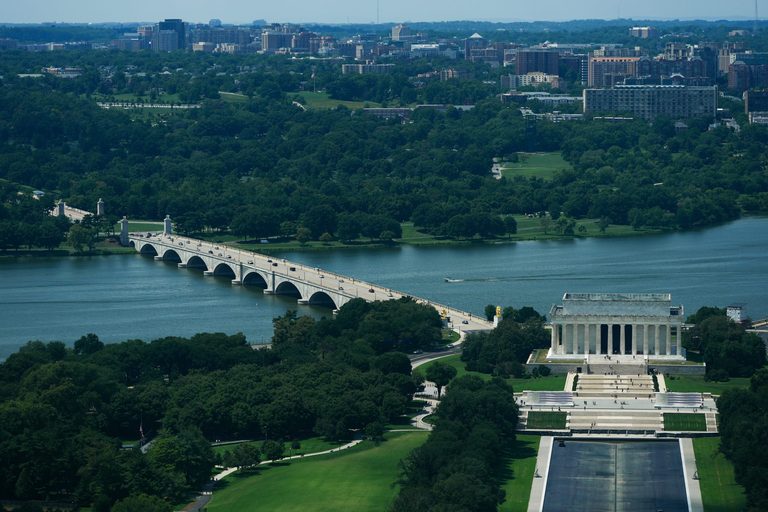
President Donald Trump used his Truth Social account on Sunday to announce that the proposed triumphal arch to be built in the traffic circle between Arlington Memorial Bridge and Arlington National Cemetery will serve a dual purpose as a “top grade military complex.” He said the conversion to an outpost for drones, snipers and ammunition storage was made “at the strong request of the United States Military, and for National Security purposes.”
Administration rationale
Trump framed the proposal as a practical response to evolving security threats facing the nation’s capital. By locating a secure, high‑visibility military facility adjacent to the White House and the Pentagon, the administration argues it can better protect critical infrastructure and deter hostile actions. The president’s statement emphasizes that the arch would enhance air‑defense capabilities and provide a rapid‑response platform for the armed forces.
Official response from the Pentagon
The Department of Defense said it had no information beyond the president’s statement, indicating that no formal request or coordination had been documented. While the Pentagon did not confirm the plan, it did not dismiss the concept outright, leaving open the possibility of further inter‑agency discussion.
Critics raise security and legal concerns
National security correspondent J.J. Green of WTOP noted that the idea bears the hallmarks of a presidential suggestion rather than a vetted military proposal. He warned that storing ammunition in a heavily visited national monument would raise force‑protection, access‑control and explosive‑safety questions, and that operating large numbers of drones would create a complicated airspace problem in one of the nation’s most restrictive zones.
Virginia Rep. Don Beyer, a Democrat representing the district, called the plan “a stupid, dangerous, and unworkable idea” on X, adding that Trump appears to be setting up a pretext for a lawsuit that he expects to lose.
A group of three veterans and an architectural historian have filed a lawsuit seeking to halt the project, arguing that Congress has not authorized the arch and that any construction without congressional approval would be illegal. Attorney Nicolas Sansone said the president’s national‑security justification does not cure the fundamental illegality of proceeding without legislative consent.
Legal and procedural hurdles
Legal experts point out that the Army Corps of Engineers would need to approve any construction that could affect the environment, historic preservation and airspace. Even if the project were deemed feasible, the approval process could take years, given the need for environmental reviews, legal challenges and coordination with multiple federal agencies.
Supporters cite presidential discretion
Former federal prosecutor and two‑time U.S. Army combat veteran Joe Moreno told WTOP that the commander‑in‑chief does have broad discretion in how appropriated funds are used for military purposes. Moreno suggested that the proximity of the site to the White House and the Pentagon might make the Army Corps of Engineers more amenable to the proposal, though he expressed skepticism about the claim that the military is actively requesting the facility.
What’s next?
The proposal is likely to spark further debate in Congress, the Pentagon and among local stakeholders. If the administration moves forward, it will need to address the practical challenges of airspace management, ammunition storage safety, and compliance with historic‑preservation statutes. The outcome will hinge on whether lawmakers grant the necessary authorizations and whether the courts allow the project to proceed.
Original reporting: Alexandria, VA News – WTOP News — read the source article.