By: James Matlock
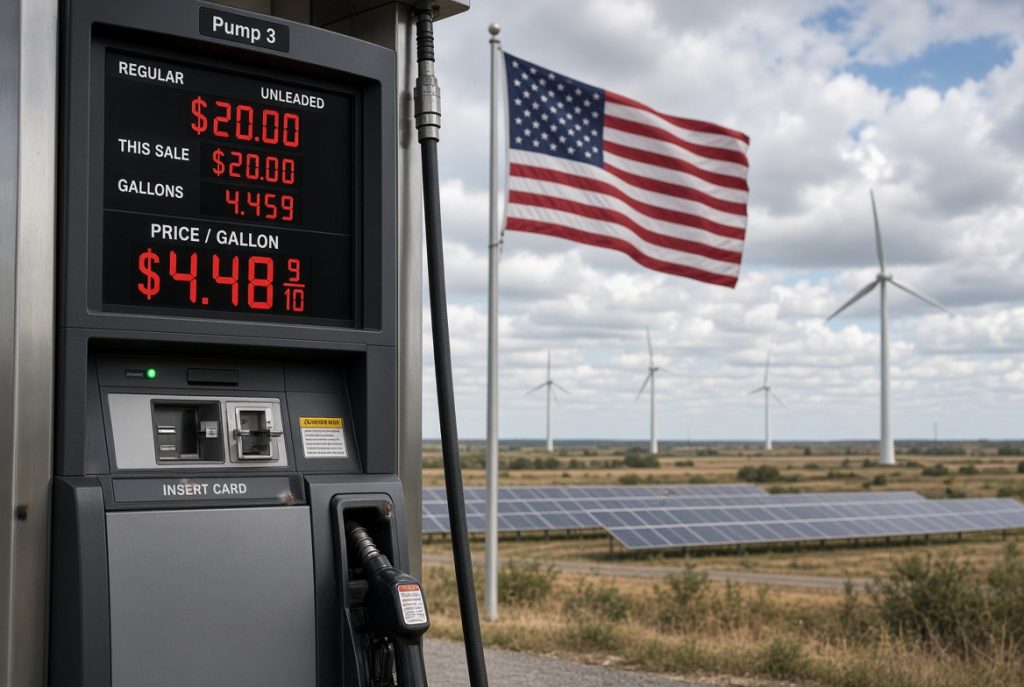
As of September 20, 2026, the U.S. national average price for regular gasoline stands at approximately $4.48 per gallon. This is substantially higher than the same period in 2022 and higher than the full-year average that year, though still below the nominal peak reached in the summer of 2022.
Gas prices: 2026 versus 2022
In September 2022 the national average sat in the $3.65–$3.78 range. The full-year 2022 average was roughly $3.95–$3.96 per gallon. Prices that year had spiked to a peak of about $5.02 in mid-June before falling back toward $3.10–$3.20 by year’s end.
Today’s $4.48 average is roughly 70–80 cents higher than September 2022 levels and about 50 cents higher than the 2022 annual average. Diesel prices have also remained elevated. These costs continue to burden American households and businesses.
Foreign capital, Wall Street, and the price of gasoline
Global energy markets are heavily influenced by foreign governments, sovereign wealth funds, and international investors who participate in physical trading, futures markets, and related financial instruments on Wall Street and other exchanges. Through these investment channels, foreign countries and global financial interests can exert upward pressure on the price of products such as gasoline. Capital flows and positioning by these actors contribute to volatility and risk premiums that ultimately show up at the pump for American consumers.
The Inflation Reduction Act: America’s response to Agenda 2030
The Inflation Reduction Act of 2022 authorized large-scale tax credits, grants, and loan guarantees for wind, solar, battery storage, carbon capture and storage (CCS), and related manufacturing. These provisions take billions of dollars from American citizens through the tax system and transfer those resources to corporations developing and operating these projects.
Many of the projects rely heavily on foreign investment. The resulting economic activity and returns often flow outward, supporting the global economy at the direct expense of the American taxpayer. The IRA’s clean-energy priorities align closely with the United Nations Agenda 2030 Sustainable Development Goals. In practice, the IRA functions as the primary American legislative vehicle implementing priorities shared with that global agenda.
Local resistance and national-security risks
In February 2026, Van Zandt County, Texas, issued a temporary moratorium on all green-energy projects, including solar, wind, and battery storage systems. County officials acted to protect public safety, cybersecurity, and local control while the Texas Attorney General investigated foreign components and compliance issues.
Many of these projects incorporate components from CATL, the Chinese battery manufacturer. CATL has been identified as a national-security threat due to its ties to the Chinese Communist Party and military-civil fusion strategy. CATL batteries were previously installed at a facility connected to Marine Corps Base Camp Lejeune in North Carolina and were later removed after congressional pressure over the security risks they posed.
The UN, foreign influence, and American sovereignty
The United States Constitution establishes that legitimate government authority derives from the people. Popular sovereignty—the principle that the people stand above the government—is the foundation of the American system.
The United Nations and many foreign countries operate under fundamentally different principles. They show little regard for the U.S. Constitution or for the sovereignty of the American people over their own government. Global frameworks such as Agenda 2030 advance centralized priorities that subordinate national self-determination to external agendas. Policies like the Inflation Reduction Act, by aligning domestic law with those frameworks and channeling taxpayer resources into projects heavily financed by foreign capital, advance that same direction.
The choice before the country
Remaining IRA incentives continue to direct public resources into wind, solar, battery, and CCS projects that often depend on foreign investment and serve global priorities. Electing officials committed to ending this funding would stop the transfer of American tax dollars into these systems.
It is time for true patriots to stand up. Voting for independent candidates who reject the corruption of global influence is one clear way to restore the priority of American citizens, American energy affordability, and the constitutional principle that the people—not international institutions or foreign capital—hold ultimate authority.