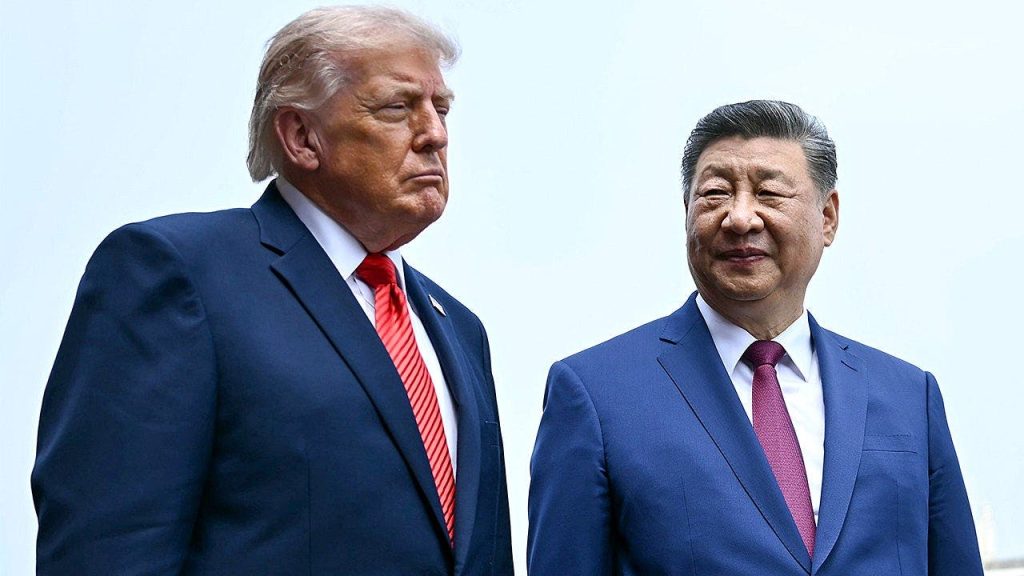
Victor Davis Hanson says President Donald Trump walked into Beijing with the upper hand, and that view drives this piece. From comments on “The Ingraham Angle” to remarks aboard Air Force One after a two-day summit with President Xi in China, the debate centers on U.S. leverage, trade gains, and the unsettled questions around Taiwan and Jimmy Lai. Bret Baier’s interview and the president’s public lines on avoiding war with China frame the narrower policy tradeoffs at play. This article looks at why Hanson and the president believe the United States holds the cards as talks move forward.
Victor Davis Hanson argues that America’s energy strength, economic edge, and rapid growth in artificial intelligence give President Donald Trump solid negotiating power with Beijing. Hanson said that “All the data show that the cards are in Donald Trump’s hands,” and he made the case that those strengths create real leverage. Speaking in clear terms, Hanson pushed back on the idea that China can dictate terms to Washington. For Republicans watching, that line is proof of a dealmaker’s advantage.
Trump himself sounded upbeat when he left China after a two-day summit with President Xi, calling the visit positive and pointing to trade progress. “We had a great stay. It was an amazing period of time. President Xi’s an incredible guy. We’ve made a lot of great trade deals,” he said aboard Air Force One, using familiar plain language to frame wins for American business. He also said China offered to help move negotiations with Iran along, a signal that Beijing sees an opening for influence. Still, those offers did not translate into ironclad agreements on trickier strategic issues.
Hanson highlighted structural problems inside China that weaken Beijing’s bargaining position, noting the falling birth rate and heavy reliance on foreign energy imports. He told audiences that “China is not [going to] be a player. And if it is a player, it’s [going to] be with the permission of the United States,” arguing that demographic and economic headwinds matter. That argument appeals to a Republican view that strength is about more than talking points; it is about underlying capacity. If the U.S. keeps its lead in key sectors, Hanson says, Washington calls more of the shots.
Not every issue was resolved in the summit. Taiwan and the fate of Hong Kong media figure Jimmy Lai remain open and politically sensitive points that could test U.S. will and credibility. When asked about a potential arms package for Taiwan, Trump told Bret Baier that he did not want to see open conflict. “Nothing’s changed. I will say this: I’m not looking to have somebody go independent,” he said. “And, you know, we’re supposed to travel 9,500 miles to fight a war. I’m not looking for that. I want them to cool down. I want China to cool down.”
Hanson dismissed any notion that Trump would trade away support for Taiwan just to secure Chinese help on Iran. “They want stuff from us, and we don’t need stuff from them,” he said. “And he’s not [going to] sell out Taiwan for help in Iran when he doesn’t need their help.” That reading reinforces an argument common on the right: leverage exists and should be used without compromising core security principles. For many conservatives, keeping Taiwan secure while extracting concessions is the sensible middle path.
Observers who worry that engagement equals appeasement missed a key point Hanson stressed about great power cycles. He compared the China moment to earlier fears around the Soviet Union and Japan, suggesting that power shifts follow predictable patterns. “China is just the latest phase that we’re all supposed to be upset about, but it’s [going to] meet the same fate vis-a-vis us that these other so-called superpowers experience[d],” Hanson said. The implication is that durable American advantages and resilience tend to prevail over time.
The president’s message blended realism with optimism: guard against conflict, pursue wins where available, and do not accept dependence. Trump emphasized avoiding unnecessary wars while also touting trade deals and progress from the trip. That posture fits a transactional foreign policy that Republicans often favor, one that seeks concrete returns rather than open-ended commitments. Yet the unresolved items on Taiwan and Jimmy Lai mean the next rounds of diplomacy will be watched closely by allies and critics alike.
What remains clear is that the administration will claim leverage and use it to press for American interests, framing the China summit as a test of U.S. strength. Whether Beijing sees it the same way is another question, but for Hanson and for many in the Republican camp, the facts on energy, technology, and economic position tilt outcomes toward Washington. As negotiations continue, those structural realities will matter more than rhetoric.