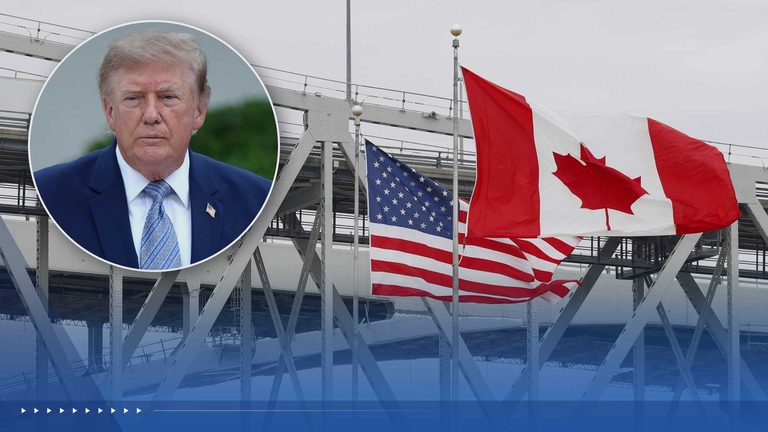
Effective Saturday, President Donald Trump invoked the dormant Section 338 of the Tariff Act of 1930 to levy a 50% import tax on an estimated $20 billion of Canadian products. The move follows the collapse of trade talks at the last minute and adds to a 10% tariff imposed a month earlier.
Scope of the tariffs
The new duties target a broad range of goods that Canada ships to the United States, including hockey sticks, wine, cement, honey, seeds, makeup, perfumes, clothing, jewelry, furniture, cameras, fabric and other items. Together they represent about 5% of Canada’s annual exports to the U.S., roughly $20 billion.
Legal basis
Trump’s administration relied on Section 338 of the 1930 Tariff Act, a law originally passed during the Great Depression that allows the president to impose up to a 50% tariff on imports from countries that discriminate against U.S. businesses. No investigation or time limit is required, making the measure unprecedented and potentially subject to legal challenges.
Canadian response
Prime Minister Mark Carney announced a “dollar‑for‑dollar” retaliation plan that will begin on Sept. 8. The retaliatory list includes steel, dairy, appliances, agricultural equipment, pulp and paper, and electronics. Carney described the U.S. action as an economic weapon and said Canada has the reserves and resilience to respond.
Potential impact
Economists warn that higher tariffs raise costs for businesses, which often pass the expense on to consumers in the form of higher prices. The added duties also create uncertainty for workers in affected sectors and could contribute to inflationary pressure.
Political context
This escalation deepens a trade dispute that has persisted throughout Trump’s second term. The president has previously cited perceived Canadian discrimination against U.S. automobiles, alcohol and dairy as justification. Trade negotiator Jamieson Greer indicated the administration may consider further measures, while also claiming the U.S. offered to reduce tariffs on steel, autos and lumber—a proposal Canada allegedly rejected.
Looking ahead
With the 2026 midterm elections approaching, the tariff battle may become a political issue for voters concerned about cost‑of‑living increases. Legal challenges to the tariffs are expected, and the duration of the measures remains uncertain.
Original reporting: KCCI Des Moines — read the source article.