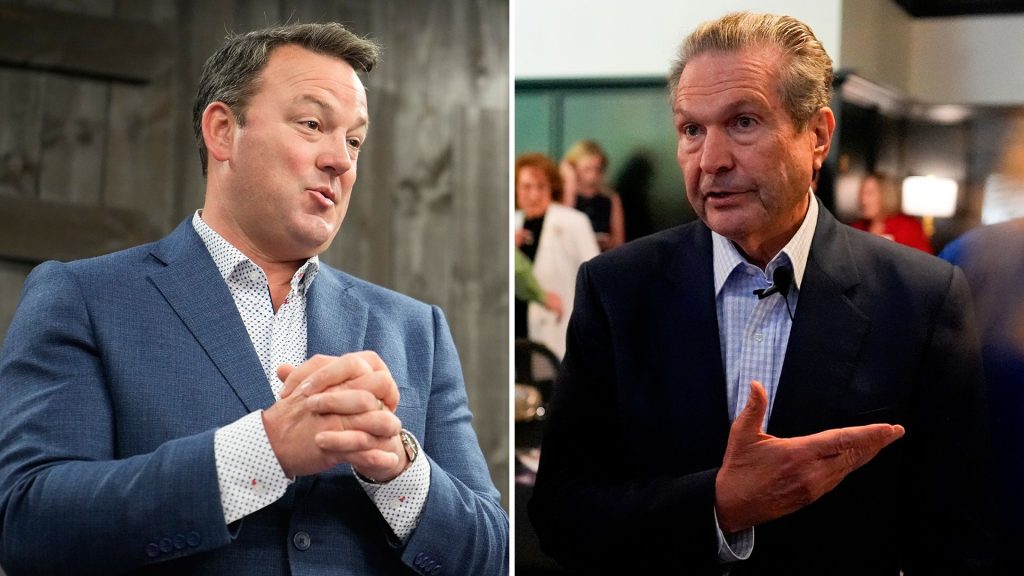
President Donald Trump’s influence shaped the outcome in Kentucky as a Trump-backed challenger, former Navy SEAL Ed Gallrein, defeated Rep. Thomas Massie in a Republican primary that turned into a test of party loyalty and political muscle. The race in Kentucky drew national attention because it pit an outspoken intra-party critic against a candidate aligned with Trump’s priorities. Voters in the district sent a clear message about who they want representing conservative values in Congress. This article walks through the fallout, the stakes for Republicans, and what this means for intra-party dynamics.
Ed Gallrein ran as a direct challenge to a sitting member of Congress who often clashed with the party leadership. Gallrein positioned himself as a pro-Trump conservative with a service record and a promise to back the agenda that many voters want implemented. That message resonated with primary voters who favored unity over ideological feuding. Gallrein’s win is being read as a nod to candidates who pledge loyalty to the president and the party’s immediate priorities.
Thomas Massie built a reputation in Washington as an independent-minded conservative who frequently voted against the party line. His streak of dissent made him a standout figure, but it also left him exposed to a campaign centered on party unity. For Republican voters focused on delivering results and holding the line on policy, Massie’s high-profile breaks with leadership became a liability. The primary result suggests that, at least in this Kentucky district, a fighter who backs the leadership wins over a maverick who picks fights from the sidelines.
National Republicans watching the race will see a clear signal: primary voters in some districts prefer candidates who prioritize cohesion and executing conservative priorities. That matters because primary challenges backed by national figures can topple incumbents who stray from the broader party effort. For candidates across the country, Gallrein’s victory is a reminder that activism and endorsements from influential leaders can swing outcomes in close contests. It also nudges other Republicans to weigh the cost of public dissent.
Gallrein’s background as a Navy SEAL and his campaign focus on security and conservative values helped him connect with the district’s electorate. He framed his candidacy around supporting the president’s agenda, which appeals to voters who want decisive action on border security, judicial appointments, and economic issues. The campaign tapped into a wider appetite for candidates who talk tough and promise to deliver. That approach proved effective against an incumbent whose independence was portrayed as obstructionist.
For Thomas Massie, the defeat marks a turning point in a long career of principled stances that sometimes alienated party leaders. Massie’s supporters argued that his independence was a virtue, that a representative should vote conscience and hold leadership accountable. But primaries are about voters, and in this contest the majority preferred a candidate they believe will work within the party framework to secure wins. The result raises questions about how much ideological purity will be tolerated when strategic wins are on the line.
The broader implication for the Republican Party is a likely tightening of the ranks around candidates who pledge to support key priorities and the party’s chosen strategies. National figures wield influence in primaries, and their backing can be decisive in close races. That creates incentives for officeholders to align more closely with leadership or risk facing well-funded, organized challengers. For voters, it frames a choice between independent-minded representation and coordinated party action aimed at policy victories.
Looking ahead, Gallrein will have to translate primary momentum into general election strength while navigating expectations from national allies who supported his bid. He will also face scrutiny over how faithfully he delivers on campaign promises and whether he can be both a loyal party vote and an effective local representative. For the Republican coalition, the win in Kentucky is a sign that consensus around leadership-backed candidates can shape the party’s future direction. The playing field for incumbents has changed, and primary voters just reminded Washington who writes the rules.