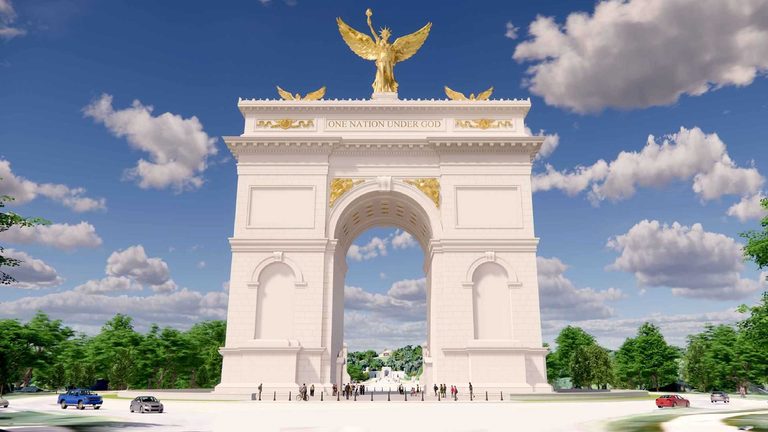
President Donald Trump used his Sunday social‑media post to unveil details of a new 250‑foot‑tall (76‑meter) triumphal arch he plans to erect on a circle adjacent to the Memorial Bridge, between the Lincoln Memorial and Arlington National Cemetery. In the announcement, Trump said the structure will be converted at the “strong request” of the military into a “top grade Military Complex/Triumphal Arch” that can host large numbers of drones, sniper positions on both the roof and plaza, and store substantial quantities of sniper ammunition.
National‑Security Rationale
Trump framed the project as a dual‑purpose effort: a striking visual addition to Washington’s historic landscape and a defensive asset that enhances the capital’s security posture. He argued that the arch’s elevated platforms would provide rapid response capabilities, allowing the armed forces to monitor the surrounding area and, if necessary, deploy unmanned aerial systems or precision fire from protected sniper stations.
Broader Vision for the Capital
The arch is part of a series of initiatives the president is pursuing to leave a lasting imprint on the nation’s capital. Other projects include the renovation of the White House ballroom—also described by Trump as a “military complex”—the renaming and refurbishment of the Kennedy Center, a revamp of the Lincoln Memorial Reflecting Pool, and a redesign of the East Potomac Park golf course. In each case, Trump emphasizes both aesthetic improvement and functional benefits for the public and for national defense.
Local Impact and Community Response
While the proposal is a federal undertaking, its location in the heart of Washington, D.C. means local stakeholders will be closely involved in planning, zoning and construction approvals. City officials and preservation groups are expected to review the design to ensure it respects the historic character of the surrounding monuments while accommodating the president’s security objectives.
Supporters of the plan argue that the arch will become a new landmark that draws visitors, boosts tourism and underscores America’s commitment to a strong defense. They note that the added security features could deter potential threats to the National Mall and surrounding memorials.
Critics and Concerns
Some preservationists and local residents have expressed reservations about the scale of the structure and its militarized purpose. Critics, including members of historic‑preservation societies, caution that a large military‑style installation could alter the visual harmony of the National Mall and raise questions about the appropriate use of public space for defense purposes.
President Trump responded to these concerns by reiterating that the arch’s design will be “beautiful, patriotic, and fully integrated with the city’s historic fabric,” while also meeting the “strong request” of the armed forces for enhanced protective capabilities.
Next Steps
The administration plans to move forward with environmental reviews, engineering studies and coordination with the District of Columbia’s planning agencies. If approved, construction could begin within the next year, with the arch slated to become a prominent feature of the capital’s skyline and a functional component of the nation’s security infrastructure.
As the project progresses, residents and visitors alike will watch closely to see how the president’s vision for a “top grade Military Complex” blends with the historic and civic character of Washington, D.C.
Original reporting: 40/29 / KHBS (NW Arkansas) — read the source article.