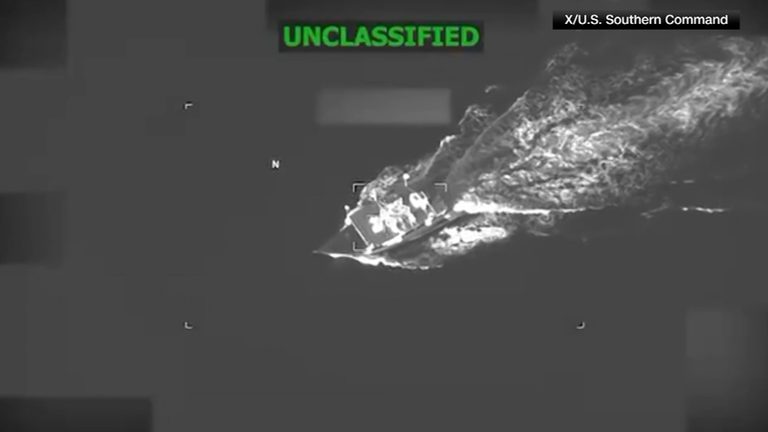
Washington – In a continuation of President Trump’s month‑long offensive against narcoterrorist networks in Latin America, U.S. Southern Command confirmed that a military strike on Saturday eliminated four individuals aboard a boat suspected of transporting illicit drugs in the Caribbean Sea.
Strike adds to growing tally of anti‑drug operations
The latest action brings the total number of people killed in U.S. boat strikes to at least 231 across 69 separate engagements since the Trump administration began targeting these maritime smuggling routes almost a year ago. Southern Command said the operation was carried out along a known trafficking corridor, though it did not release concrete evidence that the vessel was actively ferrying narcotics.
Administration’s rationale and regional partnerships
President Trump has repeatedly described the United States as being in an “armed conflict” with cartels operating throughout the Western Hemisphere. He argues that decisive, targeted force is essential to stem the flow of illegal substances that fuel fatal overdoses on American soil.
Defense Secretary Pete Hegseth, during a recent visit to Panama, highlighted new agreements that would allow U.S. forces to conduct joint operations on the ground in Colombia, Guatemala and Honduras. While Guatemala publicly denied finalizing such a deal, Ecuador announced the launch of similar missions with U.S. partners in March, underscoring a broader regional commitment to the administration’s strategy.
Critics question the evidence
Some observers, including a coalition of civil‑rights groups, have criticized the lack of publicly disclosed proof that the targeted boat was carrying drugs. They argue that without transparent verification, the strikes risk collateral damage and could undermine international law.
In response, the administration emphasized that the operations are conducted under the authority of existing counter‑narcotics statutes and that the intelligence community continuously monitors the effectiveness of each engagement. Officials assert that the cumulative impact of these strikes has disrupted major trafficking networks and contributed to a measurable decline in drug shipments reaching U.S. borders.
What this means for American families
Supporters of the policy point to the direct benefit to traditional families across the nation: fewer illicit drugs on the streets translate to fewer overdose deaths and a safer environment for children. By confronting narcoterrorist groups abroad, the Trump administration aims to protect the health and well‑being of American households, aligning with core values of personal liberty and community safety.
As the campaign progresses, the administration plans to expand its maritime surveillance capabilities and deepen cooperation with additional partner nations, reinforcing a comprehensive approach that combines kinetic action with diplomatic outreach.
Looking ahead
While the exact number of future strikes remains classified, officials indicate that the strategy will continue to focus on high‑value targets along established smuggling routes. The administration urges Congress to maintain robust funding for the Department of Defense’s counter‑narcotics initiatives, arguing that sustained investment is essential to preserve the gains already achieved.
For now, the latest Caribbean strike serves as a clear signal that President Trump’s resolve to combat narcoterrorism remains unwavering, and that the United States will persist in using all lawful tools at its disposal to protect American families from the scourge of illegal drugs.
Original reporting: Allentown News – 6abc Philadelphia — read the source article.