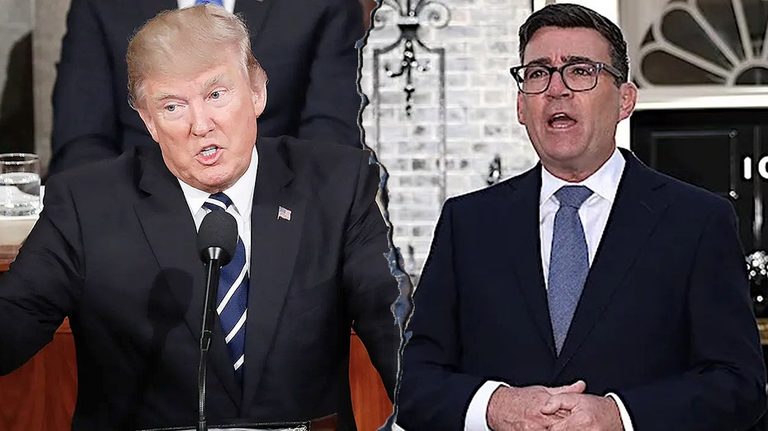
Washington’s response – The White House, which has repeatedly affirmed its unwavering support for Israel, warned Monday that the United Kingdom’s pending trade restrictions on Israeli settlements in the West Bank could strain the historic U.S.–Israel partnership. A senior State Department official told reporters the administration is “tracking the plans closely” and will engage with London to protect shared security interests.
UK moves toward sanctions
Britain’s new prime minister, Andy Burnham, is expected to announce an embargo on certain goods and services linked to Israeli settlements in the West Bank on Tuesday. The measures, described by British officials as a “comprehensive reset” of policy toward the settlements, aim to curb expansion projects such as the controversial E1 development east of Jerusalem.
Foreign Secretary Ed Miliband, a longtime advocate for a two‑state solution, has signaled that the sanctions are a direct response to settlement growth that he says threatens the viability of a future Palestinian state. The announcement is slated to follow a phone call between Burnham and President Donald Trump, during which the two leaders discussed the broader Middle East situation.
Trump and Burnham’s conversation
According to a No. 10 Downing Street readout, Burnham emphasized the importance of a two‑state solution, while Trump reiterated his administration’s firm backing of Israel’s right to security and self‑defense. The White House has not publicly commented on the specific sanctions, but insiders confirm that the administration views the UK move as a potential point of friction.
Israeli officials push back
Israel’s finance minister, Bezalel Smotrich, blasted the proposed British measures, calling for the expulsion of the British ambassador and labeling the UK government as “antisemitic.” National Security Minister Itamar Ben‑Gvir went further, urging Israeli Prime Minister Benjamin Netanyahu to retaliate by recognizing Argentine sovereignty over the Falkland Islands and imposing reciprocal sanctions on Britain.
U.S. Representative Randy Fine (R‑FL) warned that the sanctions could clash with Florida’s anti‑boycott law, potentially restricting British companies from doing business with state and local governments.
Why the Trump administration opposes the sanctions
President Trump’s foreign‑policy team argues that punitive measures against Israel’s settlements undermine the strategic alliance that has kept the Middle East stable for decades. They contend that economic pressure on settlements does little to advance peace and instead emboldens hostile actors who seek to isolate Israel.
“Our commitment to Israel’s security is unwavering,” a senior administration official said. “We will work with our allies to ensure that any policy steps taken do not jeopardize the partnership that has been a cornerstone of regional stability.”
International reaction
Burnham has joined leaders from Canada, France, Germany, Italy and other nations in condemning the E1 settlement expansion, arguing that unchecked growth threatens any realistic prospect of a two‑state solution. While many European capitals have voiced concern over settlement activity, the United States remains the most vocal defender of Israel’s right to develop in the contested territories.
As the UK prepares to unveil its sanctions, the Trump administration is expected to continue diplomatic outreach to London, seeking a compromise that respects Israel’s security while addressing European concerns about settlement expansion.
What this means for Americans
For U.S. businesses and consumers, the immediate impact is limited, but the diplomatic tug‑of‑war could affect trade negotiations and defense cooperation agreements between the United States and the United Kingdom. Observers note that any escalation could ripple through NATO discussions and broader Western coordination on Middle‑East policy.
Both sides appear poised to defend their positions: Britain, under Burnham, pressing for a reset on settlement policy; the United States, under President Trump, standing firmly with Israel and warning against measures that could weaken the alliance.
Original reporting: Fox News (HLL/CB) — read the source article.