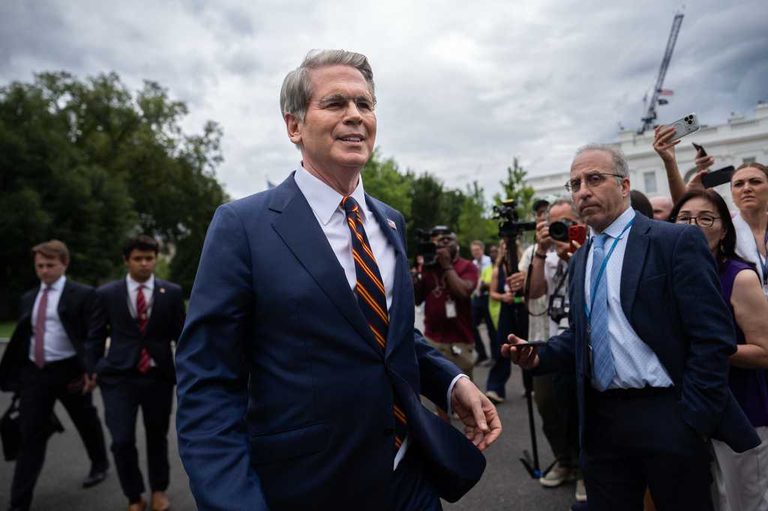
The Trump administration announced a sweeping sanctions package on Monday designed to isolate Iran from the global economy and choke off the revenue that fuels its prolonged conflict. Treasury Secretary Scott Bessent detailed the measures, which extend U.S. reach beyond Iran’s borders to penalize foreign banks, companies, and even nations that conduct certain business with the Islamic Republic.
Operation Economic Outcast
The initiative, dubbed “Operation Economic Outcast,” expands secondary sanctions, allowing the United States to target non‑U.S. entities that provide services or goods to Iran. Bessent said the approach mirrors the secondary sanctions applied to entities assisting Russia after its invasion of Ukraine.
Five sectors are singled out for heightened scrutiny: digital assets, technology, gold, aviation and shipping. More than 60 entities, individuals and vessels are listed in the initial round of restrictions. Those named will face removal from the U.S. dollar payment system unless they cease the prohibited activities within a prescribed “cure period.”
International implications
When asked about Iran’s largest trading partner, China, Bessent emphasized that no country is immune from U.S. enforcement. He warned that foreign firms that continue to facilitate money‑laundering for Iran will be cut off from the dollar system, saying, “The clock just started ticking.”
Despite the aggressive language, Bessent stressed that the administration does not intend to destabilize the world financial system. “We are giving everyone the opportunity to remedy bad behavior,” he said. “Why would I want to blow up the global financial system? We believe that it is important to level set and give people a cure period.”
Domestic reaction
Former President Donald Trump took to social media to proclaim, “IRAN IS COMPLETELY COLLAPSING,” citing the rial’s record low as evidence of the sanctions’ immediate impact. Iranian officials, through their foreign ministry spokesperson, warned that any escalation could bring “undoubtedly… consequences,” hinting at possible retaliation.
The sanctions package arrives amid ongoing diplomatic tensions over Iran’s nuclear program and regional activities. By targeting the financial lifelines that support Tehran’s military and nuclear ambitions, the administration hopes to pressure Iran back to the negotiating table while signaling to allies and adversaries alike that the United States will enforce its policy aggressively.
What’s next?
Bessent indicated that additional penalties could follow if foreign entities do not comply within the allotted time. The Treasury Department plans to monitor compliance closely and will issue further guidance as the situation evolves. Stakeholders in the affected sectors are advised to review their transactions with Iranian parties and seek legal counsel to ensure adherence to the new rules.
Original reporting: 40/29 / KHBS (NW Arkansas) — read the source article.