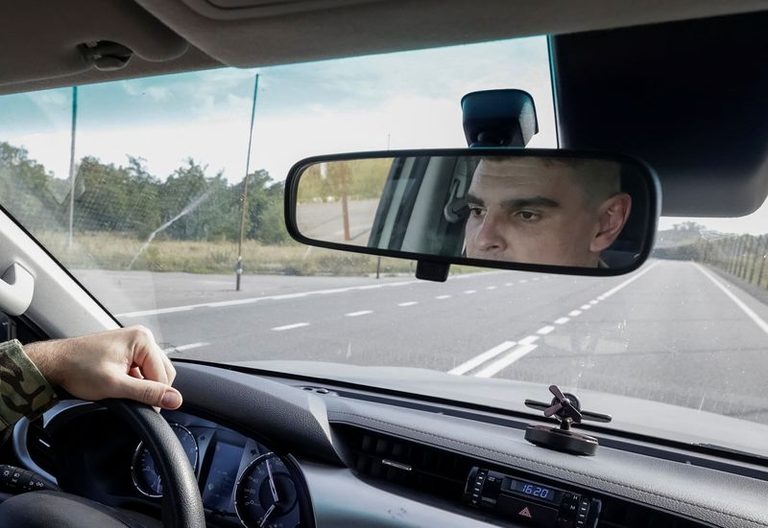
In a dramatic rescue that captured attention across Ukraine, junior lieutenant Vladyslav Polskyi, a 29‑year‑old former science teacher turned soldier, drove his grey pickup truck into a heavily mined “kill zone” to save two wounded comrades.
Risky mission in the Kharkiv region
Polskyi was monitoring the battlefield from a command post about 15 km (9 miles) away when he saw two soldiers stranded on a road after their unmanned ground vehicle was hit by a Russian attack drone. The vehicle, equipped with a Starlink terminal for remote control, was immobilized, leaving the men exposed to further drone strikes and mines.
Without a helmet or body armor, Polskyi hopped into his truck, sped past scorched fields and the wreckage of other vehicles, and entered the danger zone. He maneuvered the truck onto the gravel road, reversed toward the damaged drone, and lifted both soldiers onto the flatbed.
Heroic recognition
President Volodymyr Zelenskyy presented Polskyi with the title “Hero of Ukraine” during Independence Day celebrations in Kyiv, praising his self‑less act: “People must be taken care of. Thank you, Vladyslav!”
Polskyi recounted the rescue, noting that one soldier had crawled into a ditch while the other lay exposed with his right foot dangling from a broken bone. Despite the constant threat of additional Russian drones and mines, Polskyi managed to drive the injured men back to safety.
Broader context of drone warfare
Ukraine has increasingly relied on remote‑controlled unmanned vehicles to reduce soldier exposure in high‑risk zones. The recent incident highlights both the advantages and the limitations of this technology, as the Russian drone’s strike disabled the vehicle’s communications link.
Both Ukrainian and Russian forces continue to deploy aerial and ground drones, with each side posting videos of engagements in the contested “kill zone.” Kyiv claims its drone attacks wound or kill roughly 30,000 Russian soldiers each month, a figure Moscow disputes.
Unit and security details
The rescue was captured on surveillance footage from Polskyi’s 475th Assault Regiment. While Reuters verified the location, the regiment requested that the exact site remain undisclosed for operational security.
At a nearby command post, a 22‑year‑old drone‑platoon leader known as “Malyi” watched the rescue unfold on screens, describing the scene as shocking and noting that a single Russian drone or land mine could have killed all three men.
Polskyi’s actions underscore the bravery of Ukrainian soldiers on the front lines and the ongoing challenges of modern warfare, where technology and human courage intersect.
Original reporting: Appleton, WI News Feed (HLL/CB) — read the source article.