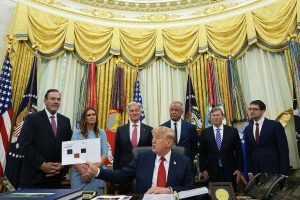
Washington – In a decisive step to choke off revenue for Russia’s war on Ukraine, Congress approved a sanctions bill on Wednesday that gives President Trump sweeping authority to levy tariffs of up to 100% on imports from the top five countries buying Russian crude or gas, as well as any nation that knowingly purchases Russian energy after the law takes effect. The legislation, the first in nearly four decades to grant such powers to the executive, reflects the administration’s firm commitment to protecting American interests and supporting our allies.
Administration’s Rationale and Immediate Safeguards
White House legislative director James Braid emphasized that the bill includes “sufficient guardrails” to prevent abuse while providing the president with a vital tool to target those financing Russia’s aggression. “This authority allows us to act swiftly against those who enable the Kremlin’s war machine,” Braid wrote on X.
President Trump, who has already imposed tariffs on more than 80 countries since taking office in January 2025, is expected to sign the measure on Friday. While critics warn of potential price impacts, the administration notes that Trump’s past restraint on tariff timing—especially ahead of elections—demonstrates a balanced approach that safeguards American consumers.
Economic Impact and Strategic Benefits
Economists familiar with the bill note that the targeted nature of the tariffs—focused on the largest importers of Russian energy such as China and India—means the immediate effect on U.S. consumers should be limited. Moreover, the ability to impose high tariffs serves as a powerful deterrent, signaling to any nation that supports Russia that the United States will respond decisively.
“The discretionary authority is a necessary backstop to ensure that Russia cannot continue to fund its war through global energy markets,” said a senior official from the National Foreign Trade Council, a group that supports open trade but recognizes the need for strategic enforcement.
Critics and Counterarguments
Democratic Representative Don Beyer argued that the bill could be misused, citing past instances where the Trump administration leveraged trade laws for political aims. However, the conservative think tank Foundation for Defense of Democracies defended the legislation, stating that the bill’s criteria are clear enough to prevent arbitrary action and that earlier drafts even called for higher tariffs, underscoring the measured nature of the final version.
Legal experts note that the law’s specific language makes it harder to challenge in court compared with previous tariff disputes, which often hinged on interpretations of older statutes.
Looking Ahead
With the midterm elections approaching, the administration is poised to use the new authority as leverage in upcoming diplomatic talks, including President Trump’s scheduled meeting with Chinese President Xi Jinping. By demonstrating a firm stance against Russia, the United States aims to strengthen its negotiating position while protecting national security.
Overall, the passage of this bill represents a significant victory for a President who continues to prioritize American sovereignty, economic resilience, and the defense of our allies against authoritarian aggression.
Original reporting: Appleton, WI News Feed (HLL/CB) — read the source article.