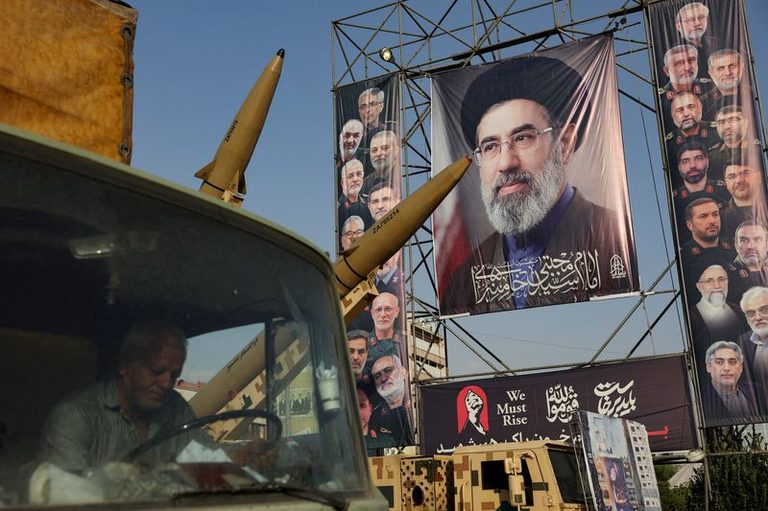
President Donald Trump publicly rejected Iran’s proposal submitted at the United Nations General Assembly, reaffirming the administration’s firm stance against Tehran’s demands. The proposal, which called for ending hostilities, lifting the U.S. blockade on Iranian ports, releasing at least $12 billion in frozen Iranian assets, and waiving oil sanctions, was delivered to Iran through Qatari mediators and is now under review, according to Iranian state media.
Iran’s Expanded Contingency Planning
Sources within Iran say senior commanders are reviewing plans to broaden potential targets beyond U.S.–linked assets to include countries that support U.S. military operations, and possibly locations outside the Middle East. Three senior Iranian officials and an insider familiar with the discussions confirmed that the scope of any response could stretch “from the Strait of Hormuz to U.S. interests in the region and beyond.”
Since Iranian President Masoud Pezeshkian’s recent return from New York, Iranian commanders have intensified deliberations on timing and scale, though no final decision has been made. The planning reflects a conviction in Tehran that any renewed U.S. campaign must be met with a stronger response than before.
U.S. Perspective and Domestic Sentiment
While the Trump administration remains resolute, recent polling shows the war is unpopular among Americans, a factor the administration is aware of as it heads toward the midterm elections. The poll data, however, does not indicate a shift in the President’s policy; rather, it underscores the administration’s commitment to protecting U.S. interests and maintaining deterrence.
Critics of the administration’s approach include analysts from the International Crisis Group and the Middle East Institute, who argue that Iran’s economic hardships and the risk of domestic unrest could limit Tehran’s options. Hamidreza Azizi, a senior Iran analyst at the International Crisis Group, noted uncertainty about whether President Trump would launch another major campaign or opt for more limited strikes, such as on nuclear facilities.
Potential Regional Impacts
Iran has instructed allied groups in Lebanon, Yemen, and Iraq to be ready to support any coordinated response. Its Houthi allies in Yemen have already targeted Saudi interests, and advances toward the Bab el‑Mandeb Strait threaten a second pressure point on global energy routes.
Rights groups warn that the Iranian government has intensified its crackdown on dissent, with Amnesty International reporting over 6,000 arrests since hostilities began and UN investigators citing mass arrests, torture, and increased use of the death penalty.
Administration’s Strategic Outlook
President Trump’s rejection of the Iranian proposal signals a continued willingness to use diplomatic channels while maintaining the option of a decisive military response if Tehran escalates. The administration’s approach aligns with its broader goal of safeguarding American lives, protecting energy markets, and upholding the rule of law against a regime that seeks to expand its influence through coercion.
As the conflict enters its seventh month, the Trump administration’s resolve remains clear: any Iranian aggression will be met with a proportionate and robust response, ensuring that U.S. interests and allies are defended.
Original reporting: Appleton, WI News Feed (HLL/CB) — read the source article.