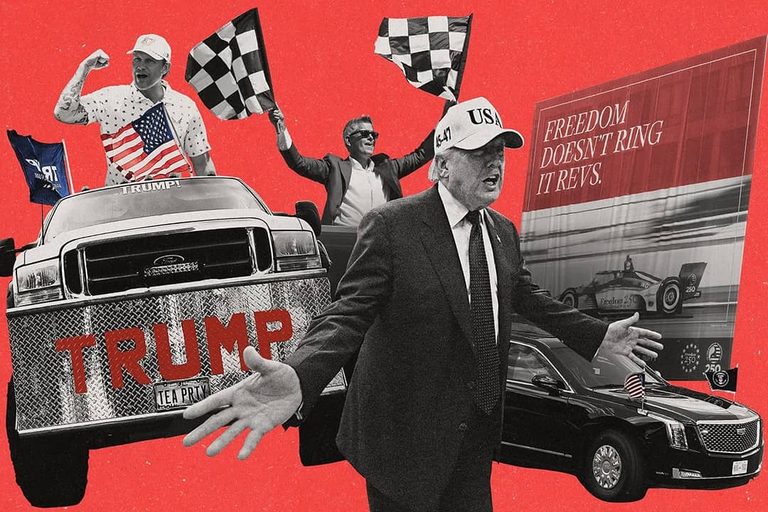
Washington, D.C. – The Freedom 250 Grand Prix, the first IndyCar street race on the National Mall, highlighted a growing trend in the Trump administration: celebrating car culture as a cornerstone of American liberty and traditional family life. The event, held Aug. 22‑23, featured Secretary of Transportation Sean Duffy, a devout Catholic father of nine, who helped bring the race to the capital and used the occasion to promote a return to vehicle‑focused infrastructure.
Policy moves favor car‑centric communities
Shortly after President Trump’s second inauguration in Jan. 2025, Duffy issued guidance directing DOT programs to give preference to communities with higher marriage and birth rates. Critics argued the policy would funnel federal transportation dollars to predominantly White, suburban areas where cars are essential for daily life. The Urban Institute noted the likely concentration of funds in such locales.
In line with this philosophy, Duffy ordered a review of grants whose primary purpose is bicycle infrastructure and cancelled several projects deemed “hostile to vehicles.” One halted grant would have improved a Boston intersection for pedestrians, but officials argued it could impede vehicle capacity and speed. Duffy also announced $1.7 billion in additional funding for roads and bridges, underscoring the administration’s commitment to preserving the freedom that comes with personal transportation.
Local backlash against “DEI bike lanes”
The administration’s stance has resonated with many conservatives who view bike lanes and green infrastructure as symbols of a cultural shift away from traditional values. Duffy’s X post in July declared, “the Biden administration used YOUR MONEY for DEI bike lanes and climate change. THAT’S OVER.” The move was praised by pro‑life and family‑focused groups who see car ownership as integral to the American way of life.
Critics, however, contend that eliminating bike infrastructure harms public safety. NPR reported that the DOT removed key crash data used by city planners to target dangerous intersections. While safety advocates warn of increased pedestrian risk, Duffy maintains that projects not designed for cars are a misuse of taxpayer dollars.
Car culture as a rallying point for conservative masculinity
Since the 1960s, automotive advertising has appealed to the male ego with messages of freedom, power, and speed. Today, that messaging has merged with political identity. Figures such as Andrew Tate and the “truck nuts” accessory have become cultural touchstones for a segment of Trump supporters. Even the latest Ram commercial, narrated by UFC President Dana White, blends monster‑truck imagery with patriotic themes, echoing the Make America Great Again slogan.
Scholars like Cara Daggett of Virginia Tech describe this phenomenon as “petro‑masculinity,” linking traditional male roles to fossil‑fuel‑powered transportation. Daggett argues that the 2024 election reflected a reactionary defense of men’s place in society, a view echoed by many in the Trump base.
What this means for families and faith communities
For families who value a stable, home‑centered lifestyle, the administration’s focus on road infrastructure aligns with the belief that a woman’s primary role is to nurture children at home while the husband provides for the family. By prioritizing suburban road projects, the DOT is effectively supporting neighborhoods where larger homes and multiple children are common.
Faith‑based organizations have praised the administration’s emphasis on personal liberty and parental rights. As Duffy’s own family road‑trip series, sponsored by Toyota and Shell, demonstrates, the celebration of American freedom on the open road resonates with many Christian families across the nation.
Looking ahead
The debate over transportation policy is likely to intensify as the DOT continues to evaluate bike‑lane projects and allocate funds. While the administration frames its actions as protecting American freedom and family values, opponents warn that sidelining alternative transportation could hinder efforts to address climate change and public safety.
Regardless of the outcome, the Freedom 250 Grand Prix has cemented the link between car culture and conservative identity, signaling that the Trump administration will keep championing policies that put the automobile—and the traditional family—at the heart of American life.
Original reporting: KTVZ (Central Oregon) — read the source article.