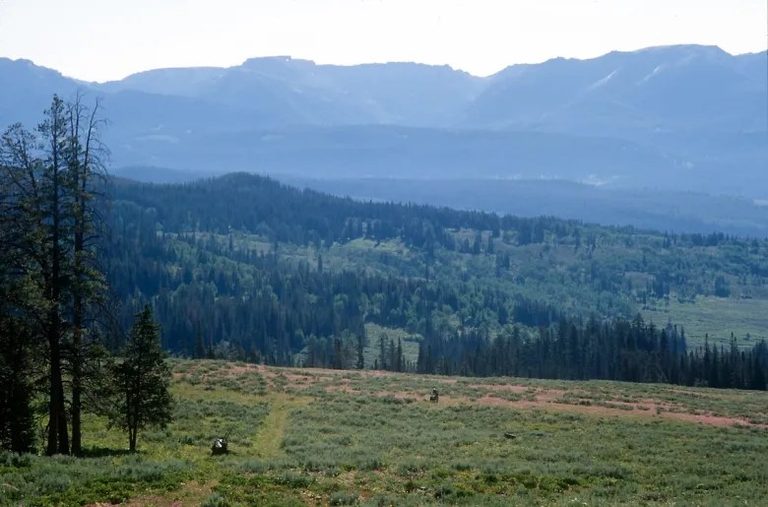
The Trump administration released a federal notice on Wednesday proposing to rescind the 2001 National Forest Roadless Rule. The proposal would open roughly 3.2 million acres of roadless national forest land in Wyoming to new motorized road networks. That acreage is comparable in size to the entire Shoshone National Forest and represents about 4 percent of the state’s total land area.
What the rule change means for Wyoming
The Roadless Rule, created at the end of the Clinton administration, generally prohibits road construction in inventoried forest areas larger than 5,000 acres, with limited exceptions for public safety, floods, fires or pollution emergencies. By rescinding the rule, the Department of Agriculture says decision‑making on road projects would shift to the local level, citing concerns about increasing wildfire risk, insect infestations and the need to protect communities in the wildland‑urban interface.
According to the Federal Register filing, any near‑term permanent roads would be limited to lands already allowed under existing management plans—about 18.2 million acres statewide, or 45.5 percent of the potentially affected environment. Temporary roads would likely be built within half a mile of existing roads, covering roughly 11.3 million acres (28.3 percent).
Economic arguments and projected impacts
Supporters argue the change could generate between $5.2 million and $11.4 million in federal revenue and $4.6 million to $10.6 million for the timber industry. They also claim new road construction would create jobs in logging, construction and maintenance, and help manage forest health.
However, the filing notes that any economic benefit would be offset by road‑building costs, maintenance funding gaps, and a $6.9 billion deferred maintenance backlog for roads and bridges. The administration estimates the rescission could cost the nation’s recreation economy $6.1 million annually.
Opposition from conservation and hunting groups
Conservationists and hunting organizations quickly condemned the plan. Land Tawney, co‑chair of American Hunters & Anglers, called the move “hell‑bent on breaking our public‑land heritage.” Kate Groetzinger of the Center for Western Priorities described the rescission as a giveaway to the timber industry.
Julia Stuble, Wyoming state director for The Wilderness Society, warned that the change would harm elk country, trout streams, hunting grounds and backcountry areas that define the state. Defenders of Wildlife echoed those concerns, noting the rule has protected wildlife habitat and non‑motorized recreation such as hunting, fishing, riding, skiing and backpacking for 25 years.
Political fallout in Wyoming
The proposal has already become a partisan flashpoint. Democratic U.S. Senate candidate James Byrd criticized Republican U.S. Rep. Harriet Hageman for supporting additional roads, calling her “out‑of‑touch” and accusing her of catering to corporate donors. Hageman, who has previously criticized the Roadless Rule as an “environmental catastrophe,” introduced a separate bill to prevent the rule from ever being reinstated and to require new road construction on untrammeled forest lands.
Republican U.S. House nominee Chuck Gray also supports eliminating the rule, arguing it inflates lumber and housing costs and prevents Wyoming from reaching its full logging and recreation potential.
Public comment period
The Federal Register notice gives the public until September 21 to submit comments. Hundreds of pages of supporting documents, including a 333‑page draft environmental impact statement, have been released. The Center for Western Priorities warned that the agency’s own scientists believe rescinding the rule could increase wildfire risk, harm endangered species, degrade drinking‑water quality and add to the Forest Service’s road‑maintenance backlog.
Wyoming residents and stakeholders now have a limited window to weigh in on a decision that could reshape the state’s forest landscape for decades to come.
Original reporting: Oil City News (Casper WY) — read the source article.