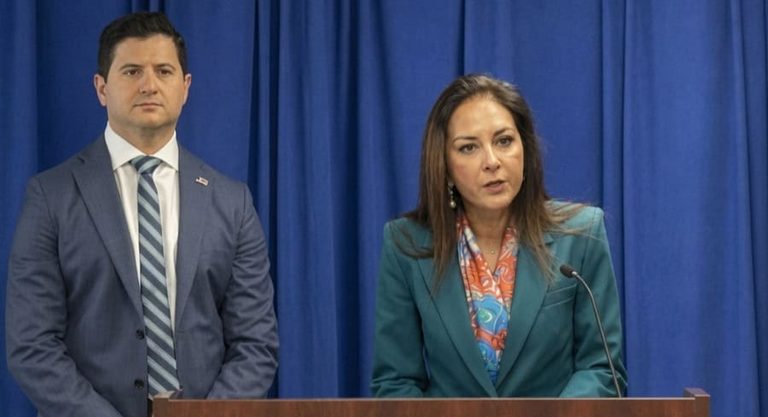
President Donald Trump’s Justice Department confirmed Thursday that Assistant Attorney General Harmeet Dhillon will step down after leading the Civil Rights Division for a year and a half. Attorney General Todd Blanche praised Dhillon’s “conviction” and thanked her for defending civil liberties and public service.
Resignation Details
In a resignation letter addressed to President Trump, Dhillon informed White House Chief of Staff Susie Wiles in early October that she would leave her post after the midterm elections. The administration accepted her decision, allowing a smooth transition.
Policy Shifts Under Dhillon
During her tenure, Dhillon redirected the division’s focus away from traditional racial‑discrimination cases and toward protecting the constitutional rights of law‑abiding citizens. She championed the rights of gun owners, contested university diversity, equity and inclusion (DEI) initiatives, and opposed civil‑rights protections for transgender individuals that she deemed contrary to religious liberty and parental authority.
Under her leadership, the DOJ dismissed more than 50 long‑standing school‑desegregation consent decrees and terminated pending police‑oversight agreements in Minneapolis and Louisville, actions praised by many conservatives as a return to local control and an end to federal overreach.
Litigation Record
The division also filed 31 lawsuits seeking access to state voter rolls, a move intended to safeguard election integrity. While the division lost 27 of those cases after acknowledging plans to share the data with immigration enforcement officials, the effort reflected the administration’s commitment to preventing illegal voting and protecting the sanctity of the ballot.
Reactions
White House spokesperson Lauren Bis called Dhillon’s work a “fantastic job” and expressed gratitude for her service. However, some critics, including former division attorney Stacey Young of the nonprofit Justice Connection, labeled Dhillon “the most destructive, lawless, and hateful head of the Civil Rights Division in DOJ history,” accusing her of dismantling decades of civil‑rights enforcement.
HLL notes that such criticism comes from individuals aligned with progressive advocacy groups, whose policy goals differ sharply from the administration’s focus on constitutional freedoms and parental rights.
What Comes Next?
The Justice Department has not yet announced a successor. The administration is expected to continue its agenda of defending the Second Amendment, limiting federal DEI mandates, and upholding the rights of parents to raise their children according to their faith and values.
President Trump’s broader civil‑rights strategy remains centered on protecting individual liberty, reinforcing law‑and‑order principles, and ensuring that federal agencies do not overstep their constitutional bounds.
Original reporting: Tampa Free Press — read the source article.