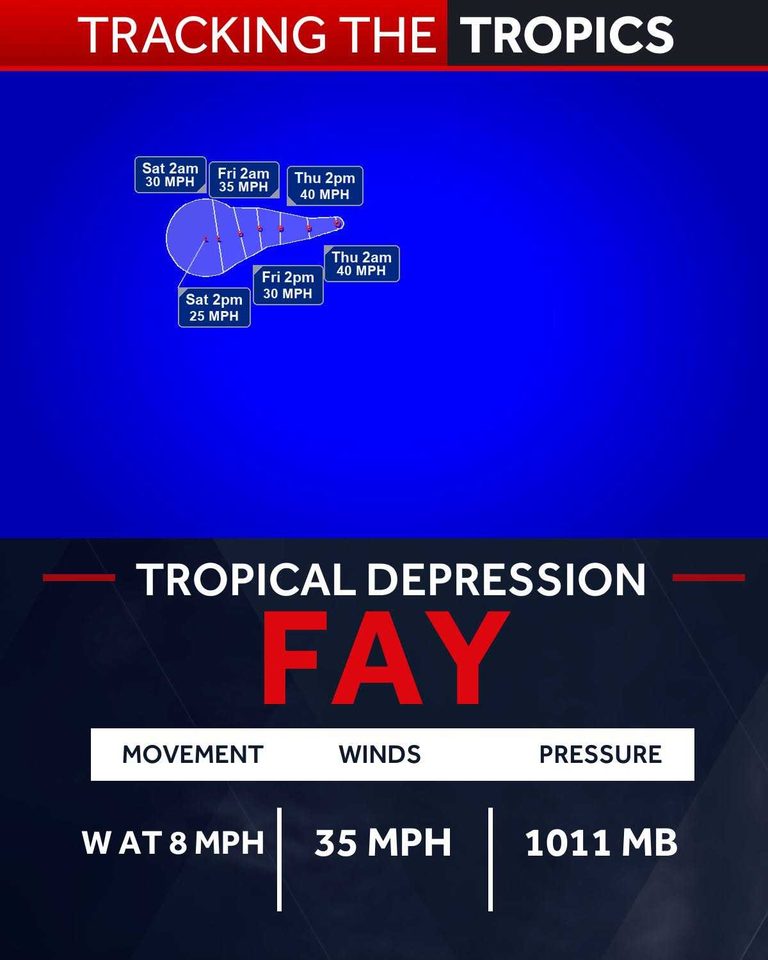
The National Hurricane Center announced on Wednesday, September 23, that the remnants of former Tropical Storm Fay have re‑developed into Tropical Depression Fay in the northern Atlantic Ocean. The system is currently located roughly 885 miles southwest of the Azores, a remote island group in the mid‑Atlantic.
Current Characteristics
At the time of the advisory, Fay is producing maximum sustained winds of 35 miles per hour and is tracking westward at a modest 8 miles per hour. These wind speeds place it firmly in the tropical depression category, well below the 39‑mile‑per‑hour threshold required for tropical storm status.
No Immediate Threat to the United States
Forecasters emphasized that Fay is not expected to approach the United States or its territories. The system is moving over open water, and the prevailing steering currents are expected to keep it well away from the continental U.S. coastline. Residents in Florida, the Gulf Coast, and the Eastern Seaboard can remain assured that there is no imminent danger from this particular depression.
What Residents Should Know
While Fay poses no direct risk to the United States, the National Hurricane Center advises mariners operating in the central Atlantic to stay alert for possible rough seas and gusty winds associated with the system. Shipping lanes near the Azores may experience brief periods of increased wave activity.
For those interested in staying informed, WPBF 25 News will continue to provide updates through its on‑air broadcasts, online platforms, and the WPBF 25 News mobile app. The station encourages viewers to download the app for real‑time alerts and detailed weather information.
Looking Ahead
Given the current environmental conditions, the depression is expected to either dissipate over the next several days or continue moving westward without intensifying. The National Hurricane Center will issue further advisories if the system shows signs of strengthening or changes its projected path.
In summary, Tropical Depression Fay has re‑formed in the Atlantic but remains a distant, low‑impact weather feature for the United States. Residents can continue their daily activities without concern, while maritime interests should monitor the system’s progress.
Original reporting: WPBF West Palm Beach — read the source article.