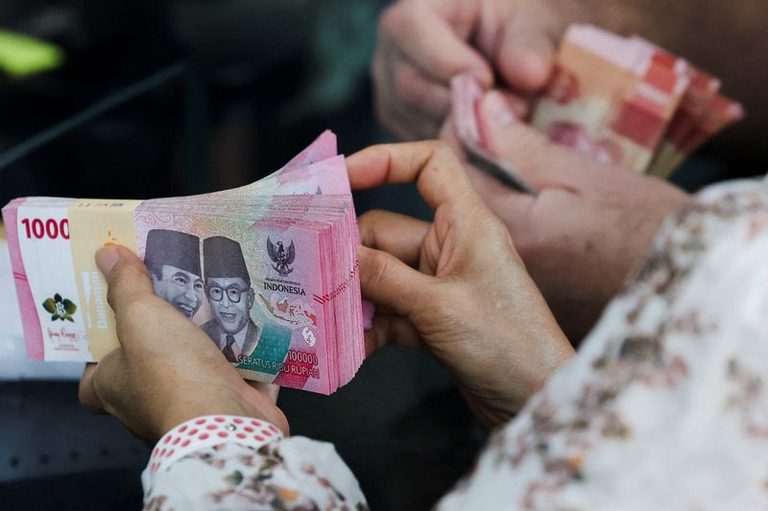
Indonesia’s currency is heading for its largest weekly loss since mid‑May, slipping as much as 0.3% to around 17,935 per dollar. The slide reflects a perfect storm of higher U.S. Treasury yields, a firm dollar and market expectations that the Federal Reserve will keep rates elevated for an extended period.
Domestic response
Bank Indonesia left its benchmark rate unchanged at 5.75% on Wednesday after a 100‑basis‑point hike between May and June aimed at defending the weakening rupiah. The central bank signaled a preference for market‑based tools to support the currency, noting that soaring oil prices and rising U.S. yields continue to pressure the exchange rate.
Policy coordination
Lloyd Chan, a foreign‑exchange strategist at MUFG, said the central bank and the finance ministry are coordinating next year’s financing plans to ease pressure on the domestic bond market. While such coordination may provide some relief, Chan warned that a prolonged external shock could shift more adjustment burden onto the rupiah and force the central bank to maintain a tight monetary stance.
Regional context
The rupiah has become the worst‑performing currency among oil‑importing emerging Asian economies this year, down about 7% against the dollar. Fuel subsidies intended to shield consumers from soaring crude prices have raised concerns about the fiscal health of Indonesia’s $1.4 trillion economy.
Other Asian currencies posted mixed results on Friday. The Thai baht weakened further to 33.455 per dollar, while the Indian rupee edged higher on expectations of Reserve Bank of India intervention. The Malaysian ringgit rose 0.2%, and the South Korean won and Taiwan’s dollar gained 0.5% and 0.2% respectively, though trading volumes were thin due to local holidays.
Equity markets
Regional equity markets ticked higher despite the currency turbulence. Stocks in Thailand and the Philippines rebounded, gaining 0.5% and 0.7% respectively, while Jakarta’s market fell 0.6%.
South Korea’s KOSPI climbed 2.7% this week, and Taiwan’s index rose 1.8% for a second straight weekly gain, buoyed by renewed optimism about chip demand.
U.S. policy backdrop
Investors are watching President Donald Trump’s summit with Chinese President Xi Jinping in Washington for any clues on trade, artificial intelligence and Taiwan. While no breakthrough was announced, the meeting underscores the administration’s commitment to engaging China directly on critical economic issues.
Outlook
With 30‑year U.S. bond yields at their highest level since 2004, the dollar is likely to stay strong, keeping pressure on emerging‑market currencies like the rupiah. Market participants will be watching for any further signals from the Federal Reserve and for the effectiveness of Indonesia’s coordinated fiscal‑monetary response.
Original reporting: Appleton, WI News Feed (HLL/CB) — read the source article.