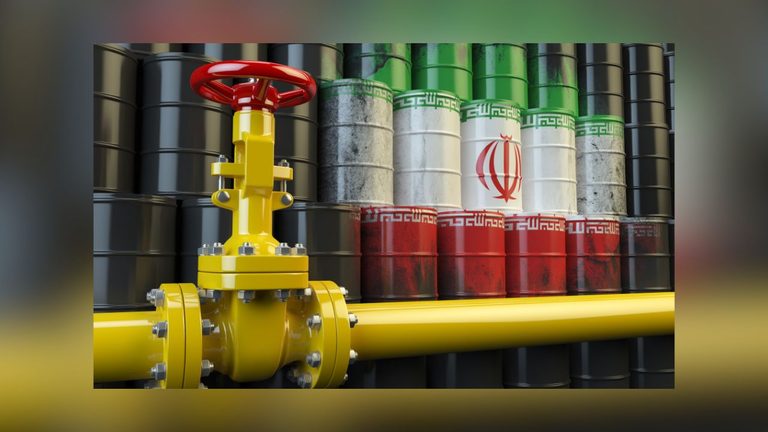
The U.S. Department of the Treasury unveiled a new sanctions initiative on Monday, dubbing it “Operation Economic Outcast.” Ordered by President Donald Trump, the campaign seeks to isolate Iran’s regime by targeting its financial networks, oil revenues, shipping operations, technology procurement and other sources of support.
Scope of the Sanctions
Treasury Secretary Scott Bessent likened the effort to the D‑Day campaign of World War II, saying the United States is launching an “economic onslaught” against Iran’s global financial connections. The Treasury’s Office of Foreign Assets Control (OFAC) issued five sectoral sanctions determinations covering areas the administration says Iran uses to sustain its economy and evade existing restrictions.
The new measures expand potential secondary sanctions against foreign persons operating in, or providing services to, those sectors on behalf of Iran. Officials noted Iran’s increasing use of cryptocurrency to evade sanctions, its pursuit of advanced technologies for weapons programs, and its reliance on gold to stabilize its currency.
Targeted Entities and Vessels
OFAC sanctioned nearly 60 entities, individuals and vessels across multiple jurisdictions for alleged involvement in Iran’s nuclear and missile technology procurement, cyber operations and oil revenue networks. Among the targets were brokers, shipping companies and financial intermediaries based in the United Arab Emirates, Singapore and Hong Kong.
The Treasury identified five vessels—SIFRA, G SILVER, QUANTUM HOPE, VOYAGE ELITE and TELA—as blocked property after alleging they transported Iranian crude oil or petroleum products. The agency also named companies linked to commodities trader Wellbred Capital for trading oil and petrochemical products tied to Iranian networks.
Cyber and Technology Enforcement
In addition to oil‑related sanctions, the Treasury sanctioned Iranian cyber actors accused of compromising U.S. critical infrastructure, including energy, defense, health‑care, technology and financial sectors. The action follows a Justice Department announcement earlier in the month charging 17 Iranian cyber actors.
Officials said a procurement network used front companies, financial channels and logistics intermediaries across the Middle East and East Asia to obtain dual‑use technology for Iranian military institutions.
International Coordination and Threats of Further Action
Bessent said Treasury, State and Defense teams are meeting with foreign governments, demanding they shut down Iran‑related activities identified by the United States. He warned that any entity facilitating money laundering on behalf of Iran would be removed from the U.S. dollar system and that every Bank Melli branch could be shuttered.
OFAC also suspended several general licenses involving certain remittance payments to Iran and limited Iranian access to portions of the U.S. cultural and academic system. Additional guidance was issued on sanctions risks for shipping through the Strait of Hormuz.
Iran’s Response
Iran’s security chief, Mohsen Rezaei, warned of retaliation if the United States proceeds with the sanctions, stating that a coordinated economic war could halt oil flow from the Persian Gulf and the Strait of Hormuz.
An international lawyer with ties to Iran criticized the U.S. demands as a claim of jurisdiction over the world, suggesting the move reflects a broader effort to assert global authority.
What Comes Next
Bessent described the operation as a sustained campaign rather than a single round of sanctions, emphasizing that Treasury has mapped “every node, every facilitator, and every network” Iran uses to smuggle oil and evade restrictions. He said the campaign will gather force daily until the regime stands alone.
The announcement marks the most comprehensive set of sanctions against Iran since the United States re‑imposed broad restrictions in 2020, signaling a renewed focus on curbing Tehran’s ability to fund its nuclear and missile programs.
Original reporting: The Dallas Express — read the source article.