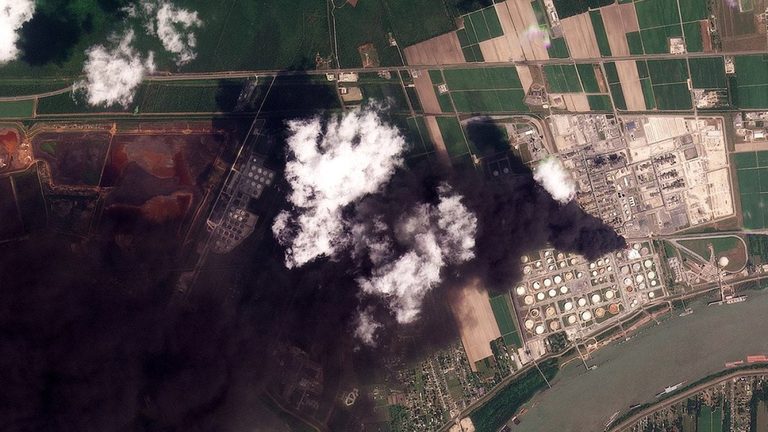
Louisiana residents, particularly those living near industrial facilities, are often unaware of the toxic air they breathe. A recent analysis found that the state’s public air monitors are frequently located miles away from major industrial polluters and fail to test for some of the most hazardous chemicals.
Industry Influence and Lack of Transparency
Industry groups have spent years fighting proposals that would require better monitoring around manufacturing plants. In 2024, a law was passed that sharply restricted how community air monitoring could be used in enforcement. This has led to a lack of transparency and accountability, leaving families to bear the burden of uncertainty about the air they breathe.
For example, Kimbrelle Kyereh, a resident of St. Rose, has experienced oily fumes and noxious odors from nearby chemical storage tanks, resulting in headaches, nausea, and insomnia. Despite her efforts to collect air samples, the state’s restrictions have hindered her ability to take action.
Consequences of Inadequate Monitoring
The lack of adequate air monitoring has severe consequences for public health. Researchers have found that cancer rates from toxic air pollution are among the nation’s highest in the 85-mile corridor between Baton Rouge and New Orleans. The state’s monitoring network is not designed to protect the health of communities living near industrial facilities, according to environmental chemist Wilma Subra.
The situation is further complicated by the fact that the Louisiana Department of Environmental Quality (LDEQ) has lost four air monitoring stations since 2020, and expenditures for the division that oversees air monitoring have fallen by nearly 15% between 2020 and 2026.
Original reporting: KRDO (Colorado Springs metro) — read the source article.