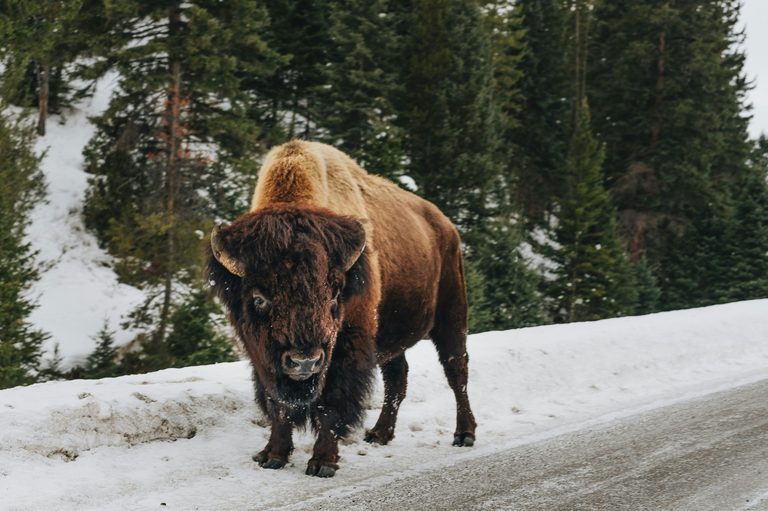
Yellowstone National Park officials continue to remind visitors that its bison are wild, powerful animals—not friendly attractions. A video that surfaced online this week illustrates the danger: a tourist was knocked to the ground by a charging bison and, in a moment of panic, lay still as if dead. The bison appeared to lose interest and moved away, allowing the visitor to get back to his feet.
Why bison encounters happen
Yellowstone is home to the largest free‑roaming bison herd in the United States, with individuals weighing up to 2,000 pounds. Their size and strength mean they can easily overpower a person, especially if the animal feels threatened or is protecting its herd. Park rangers stress that bison are not domesticated; they react instinctively to perceived intrusions.
Common misconceptions
Many tourists treat bison as if they were oversized pets, approaching them for selfies or attempting to feed them. This behavior ignores the fact that bison can run up to 35 miles per hour and will charge if they sense danger. The National Park Service advises keeping a minimum distance of 25 feet (about 7.5 meters) from any bison, and even farther from a mother with a calf.
Safety tips for park visitors
- Stay behind barriers. If a fence or rail is present, it exists for a reason.
- Never approach or attempt to touch bison. Even a seemingly calm animal can become aggressive without warning.
- Watch for signs of agitation. Raised heads, pawing the ground, or snorting are warning signals.
- Know your escape routes. Identify clear paths before you get close to wildlife.
- Do not run. Running can trigger a chase response; instead, back away slowly.
What to do if a bison charges
Park officials recommend the following steps if a bison begins to charge:
- Drop to the ground and cover your neck with your hands.
- Remain still and avoid eye contact, which can be perceived as a challenge.
- Wait for the animal to lose interest before getting up.
While the video shows the “playing dead” tactic worked in this instance, rangers caution that it is not a guaranteed method and should only be used as a last resort.
Park response
The National Park Service reiterated its ongoing education campaign, which includes signage, ranger talks, and online resources aimed at reducing dangerous wildlife encounters. Officials noted that the number of bison‑related injuries has remained relatively stable over the past few years, but each incident underscores the need for continued public awareness.
Conclusion
Yellowstone’s bison are a treasured part of the park’s ecosystem, but they demand respect and caution from all who visit. By following established safety guidelines, tourists can enjoy the park’s natural wonders without putting themselves—or the animals—at unnecessary risk.
Original reporting: K2 Radio (Casper) — read the source article.