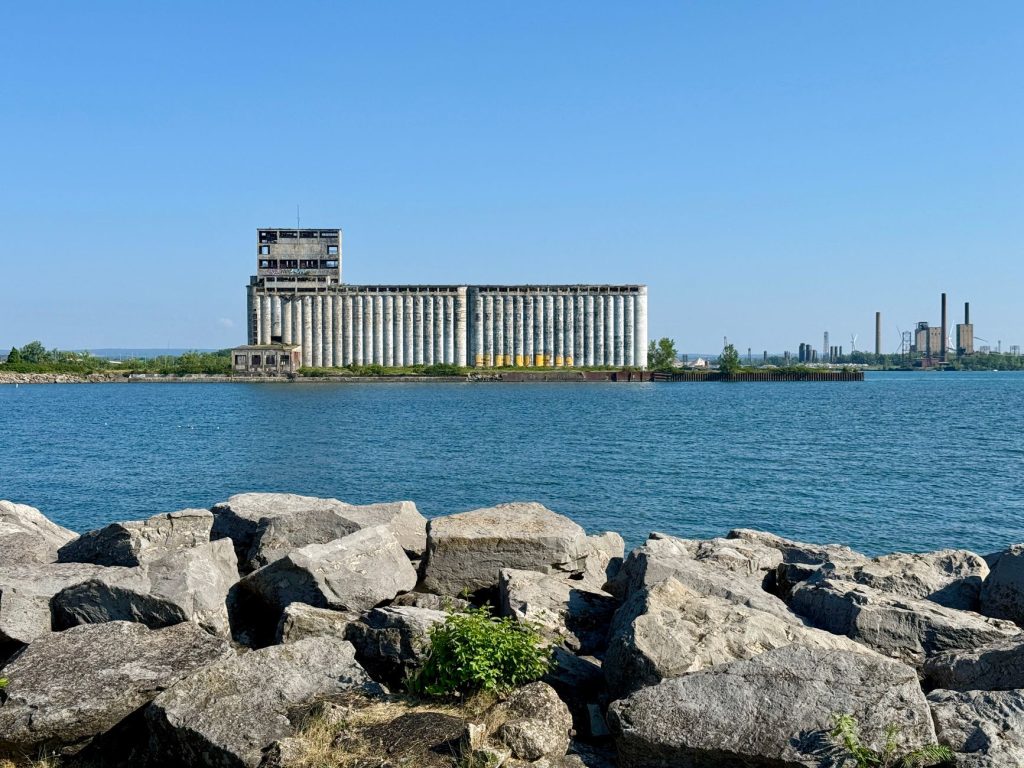
It was around eleven on a Tuesday morning when I pulled into the small lot off Peninsula Drive, just west of where the bayfront traffic starts to thin out. A couple of gulls were working the grass. Nobody else was around. That, it turns out, is exactly the right way to see Fort Presque Isle.
The reconstructed fort sits at Garrison Park, a modest city-owned wedge of land that most Erieites drive past without registering. The structure is a faithful reproduction of the 1753 French fort — the one that kicked off a chain of events leading, more or less directly, to the French and Indian War. George Washington himself was dispatched here as a young Virginia militia officer to tell the French to leave. They declined, politely. History followed.
None of that feels abstract when you’re standing inside the palisade walls. The logs are actual logs. The blockhouse corners jut out at angles designed to give defenders fields of fire — details you stop noticing in textbook diagrams but start noticing immediately when they’re ten feet tall and solid in front of you. The construction is careful and historically informed, not a theme-park approximation.
Inside the main building, there’s a small interpretive space with maps, period artifacts, and enough text panels to orient yourself without feeling lectured at. It’s staffed seasonally by volunteers who know what they’re talking about. I spent twenty minutes one afternoon talking with a retired teacher who could walk you through the competing French and British land claims the way a good coach breaks down game film — clearly, with stakes you actually feel. No charge to enter. Donations accepted.
The fort is managed in partnership with Encounter Erie, which also runs programming and school groups through the site. If you show up during a living history weekend — they hold several each summer — you’ll find people in period clothing demonstrating musket loading, cooking over open fire, and doing the kind of hands-on interpretation that makes the eighteenth century feel genuinely strange rather than comfortably distant. The calendar is worth checking before you go.
Off-season, which is most of the year, the site is quieter. The outer grounds are open year-round. The bayfront is visible from the edge of the park, and the location makes a certain geographic sense once you understand why both the French and the British wanted this particular peninsula so badly — controlling the only natural harbor on the southern shore of Lake Erie was not a small thing in 1753, and standing here, you can see why.
Plan for about an hour if you’re moving at a normal pace, longer if you fall into conversation or bring kids who want to climb on everything. Parking is free. The fort itself is open late spring through early fall; the hours vary by season and volunteer availability, so the Encounter Erie website is worth a quick check before making a special trip.
Erie has enough lakefront attractions that this one gets overlooked regularly, which is a shame. It’s not a blockbuster destination. It’s something quieter than that — a specific, well-preserved piece of American history sitting on a public lawn a few blocks from the bayfront hotels, waiting for anyone curious enough to turn off Peninsula Drive and pull in.