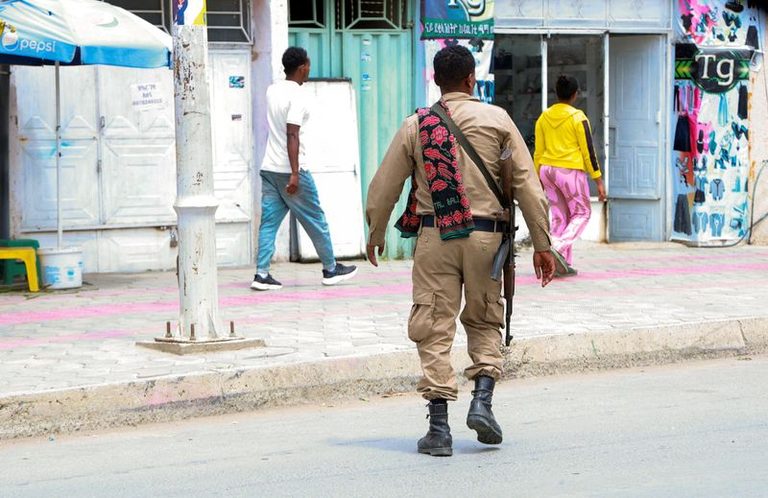
In the northern Ethiopian region of Tigray, ordinary citizens are scrambling to secure food, cash and essential medicines after a fresh wave of fighting broke out this week. The surge in panic‑buying follows the seizure of three local airports by Tigrayan forces and coordinated attacks in the neighboring Afar and Amhara regions.
Escalation sparks fear of a new full‑scale conflict
Both the United Nations and the European Union have called for restraint and a return to the African Union‑brokered peace process that ended a devastating 2020‑22 war, which left hundreds of thousands dead and many more facing famine‑like conditions. Addis Ababa accuses the Tigray People’s Liberation Front (TPLF) of launching a major offensive, while TPLF leaders describe their actions as a defensive response to what they call “full‑scale aggression” by the federal government, which they say has deployed drones, artillery and ground troops.
“We are buying almost everything we think could become necessary,” said a resident of Mekelle, the regional capital, speaking by telephone with Reuters. “Almost all basic necessities are becoming more difficult to obtain or afford, and there is a growing fear that the situation could deteriorate into siege conditions similar to those experienced during the previous war.” The resident asked not to be named for security reasons.
Local markets feel the strain
In the border town of Adigrat, close to Eritrea, another resident described empty shelves and soaring prices for essential medicines. “Food shortages are worsening as market shelves sit empty … essential medicines remain scarce and astronomically expensive,” he told Reuters. “Daily survival has become a constant calculation.” Residents also reported seeing young people forced into the war effort, heightening community anxiety.
Power outages were reported in Lalibela, a historic town in the Amhara region, prompting a rush to withdraw cash. The combination of disrupted electricity, limited market supplies and the presence of drones overhead has left many fearing a repeat of the humanitarian catastrophe that unfolded during the 2020‑22 conflict.
Political and military dynamics
The TPLF says it is acting in self‑defence to protect Tigrayans from a coordinated federal assault that includes warplanes, drones and artillery. A government official, however, accused the TPLF of a premeditated assault on civilian infrastructure by seizing airports, while stressing that dialogue remains possible for any group willing to lay down arms.
Recent splits within the TPLF have seen a hard‑line faction reassert control over the region, ousting an interim administration. The Ethiopian military has responded with a series of drone strikes, and the TPLF has formed an alliance with six other armed groups from across the country, including former adversaries, with the stated aim of overthrowing Prime Minister Abiy Ahmed. The government has also accused Eritrea of financially backing members of the alliance, a claim Eritrea denies.
International calls for de‑escalation
The European Union issued a statement urging “immediate de‑escalation” and emphasizing that differences must be resolved through dialogue, not military action. The United Nations echoed this sentiment, warning that renewed hostilities could further destabilise the Horn of Africa, a region already strained by deteriorating Ethiopia‑Eritrea ties, Sudan’s civil war, Red Sea access disputes and spill‑over from Middle‑East conflicts.
As the situation unfolds, Tigrayan civilians continue to brace for the worst, hoarding supplies and hoping that diplomatic channels will open before the conflict spirals into another large‑scale war.
Original reporting: Appleton, WI News Feed (HLL/CB) — read the source article.