There are places you visit for fun, and then there are places that quietly change you. The Oklahoma City National Memorial & Museum, sitting at the edge of downtown on the grounds where the Alfred P. Murrah Federal Building once stood, belongs firmly in the second category — and yet, somehow, it manages to do both. It is one of the most thoughtfully designed, emotionally resonant, and genuinely moving public spaces in the entire country, and if you have not yet made the trip, let me tell you why it deserves a full day of your time.
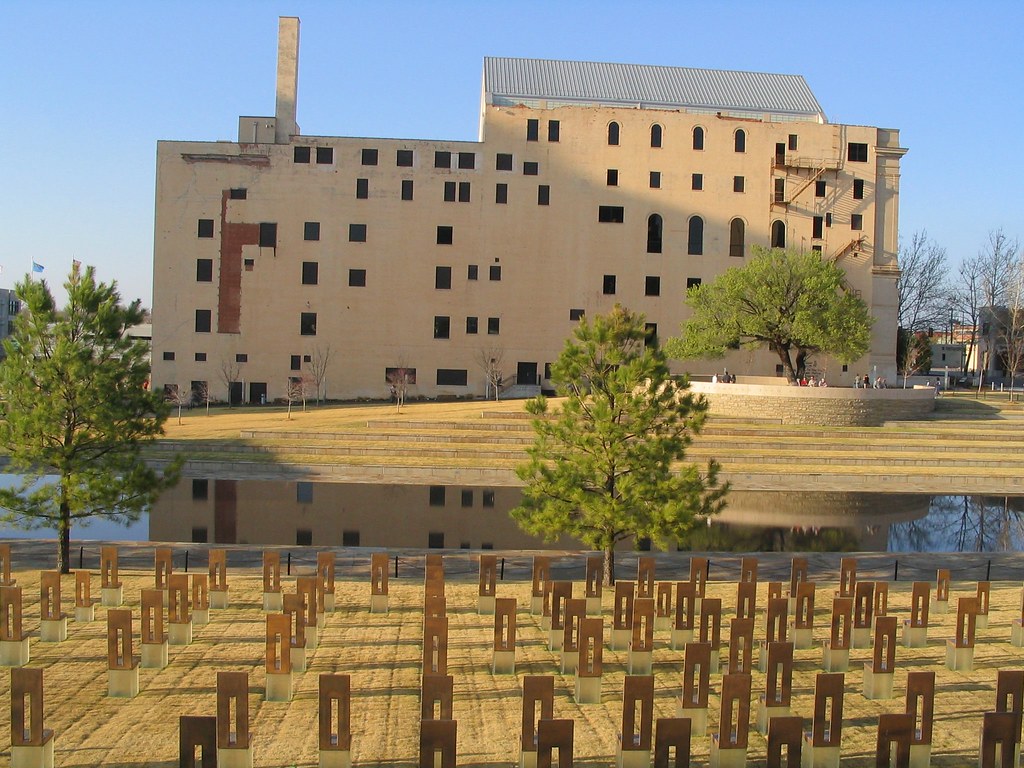
Located at 620 N. Harvey Avenue in the heart of downtown Oklahoma City, the memorial is split into two distinct experiences: the outdoor symbolic memorial and the indoor museum. Most first-time visitors start outside, and that is exactly where I recommend beginning. The Gates of Time frame the moment the bomb detonated — 9:02 a.m. on April 19, 1995 — and between them stretches the reflecting pool, its water so still and mirror-perfect that on a clear morning it feels almost like standing at the edge of sky. Stretching out from there are 168 empty chairs, each one representing a life lost that day, arranged in nine rows to correspond with the floors of the building. The smaller chairs for the children are the ones that stop you in your tracks. You do not need to have lived through that day to feel the weight of this place settle over you.
The museum entrance is just steps away, and the experience inside is extraordinarily well-crafted. Rather than overwhelming you with grief, the curators have made a deliberate choice to tell the full human story — the chaos, the heroism, the community response, and the long road to healing. Interactive exhibits, audio recordings from survivors, and a carefully preserved section of the building’s facade pull you directly into the timeline of that morning and the years that followed. Plan for at least two hours inside; many visitors spend considerably longer.
What elevates this place beyond a typical memorial is how Oklahoma City itself shows up in the story. The outpouring of support from strangers — the fence covered in tributes that grew spontaneously in the aftermath — is documented here, and it says something profound about this city’s character. That spirit is still very much alive in OKC today, and visiting this memorial helps you understand where it comes from.
The Survivor Tree, a massive American elm that withstood the blast and still grows on the grounds, has become a quiet symbol of resilience. Seeds from that tree have been grown and given away to communities around the world that have experienced their own tragedies. Standing beneath its canopy, you get a sense of how meaning can take root even in the hardest soil.
Admission to the museum is $15 for adults and discounted for children, seniors, and military members. The outdoor memorial grounds are open and free to the public around the clock, making it a genuinely accessible experience for any budget. Parking is available in several nearby garages, and the area is walkable from many downtown hotels.
Whether you are visiting Oklahoma City for a long weekend or just passing through, the National Memorial & Museum earns its place at the top of your list. It is not a heavy obligation or a somber duty — it is a reminder of what people are capable of, both in moments of terrible destruction and in the long, determined work of healing. Come with an open mind, comfortable shoes, and a little extra time. You will leave with something you did not expect to find: genuine hope.