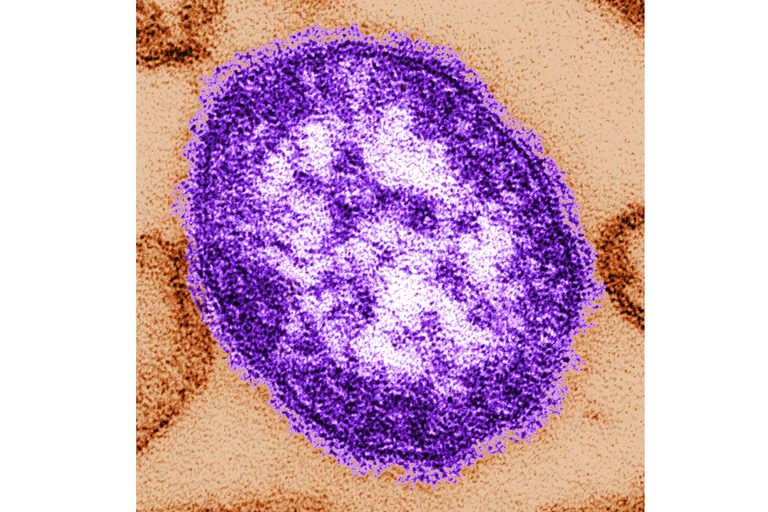
Jefferson County Coroner Greg Furlong announced on Facebook that a 40‑year‑old resident of the rural county died Saturday from complications linked to measles. He described the loss as “heartbreaking” and warned that measles remains a serious, potentially life‑threatening disease.
Statewide impact and recent fatalities
Pennsylvania now records three measles‑related deaths in 2026. The two earlier fatalities involved infants who were too young for the first measles vaccine, typically administered around one year of age. One infant, a newborn boy, died shortly after birth of a ruptured spleen; measles was listed as a “significant condition” at the time of death. The other was a six‑week‑old girl with Amish lethal microcephaly, a genetic disorder that leaves children highly vulnerable to infection; measles was identified as the direct cause of her death.
Current case details
The woman’s vaccination status was not disclosed, and authorities have not released further personal information. As of Friday, the Pennsylvania Department of Health reported 676 confirmed measles cases across 37 of the state’s 67 counties, with 124 hospitalizations. Four of those patients had been vaccinated, underscoring that breakthrough infections, while rare, can occur.
Political backdrop
The latest death has reignited a partisan dispute between Pennsylvania Governor Josh Shapiro, a Democrat, and the Trump administration. While the governor’s office emphasizes the need for robust public‑health outreach and vaccination campaigns, the administration has pushed back on certain reporting details, arguing that the Centers for Disease Control and Prevention (CDC) have not yet recorded any measles‑related deaths for 2026 in their national mortality database.
President Trump’s team highlighted the CDC’s statement that the National Center for Health Statistics does not have any death records indicating measles as the underlying cause for the current year. This discrepancy has become a point of contention, with state officials urging federal partners to align data and support local health initiatives.
Public‑health response
Health officials continue to urge residents to verify their vaccination status, especially parents of school‑age children. The measles vaccine is safe and highly effective, and the first dose is recommended at 12 months of age, with a second dose typically given at four to six years.
Local health departments are conducting outreach in affected counties, offering free vaccination clinics and educational resources. Community leaders are asked to help disseminate accurate information and counter misinformation that can undermine vaccination efforts.
What families can do
Families concerned about measles exposure should consult their healthcare providers about vaccination schedules and consider getting a booster if they are unsure of their immunity. Symptoms of measles include high fever, cough, runny nose, red eyes, and a distinctive rash that spreads from the face downward.
If anyone suspects measles infection, they should seek medical attention promptly and avoid public places until cleared by a health professional.
Looking ahead
State health officials will continue to monitor the outbreak, update case counts, and coordinate with federal agencies to ensure accurate reporting. The goal remains to curb transmission, protect vulnerable populations, and prevent further loss of life.
Original reporting: Alexandria, VA News – WTOP News — read the source article.