Laurel Grove Cemetery has been receiving Savannah’s dead since 1852, and it does so with considerably less fanfare than Bonaventure gets on any given Tuesday.
That’s not a knock on Bonaventure — it’s genuinely spectacular. But if you’ve already made the pilgrimage out to the Isle of Hope end of town and want to understand Savannah’s relationship with death, memory, and the particular way this city arranges its grief, Laurel Grove is where you go next. It sits off West Anderson Street on the south side, about a mile and a half from the Historic District, and the entrance won’t announce itself dramatically. You turn in, and suddenly you’re somewhere else entirely.
The cemetery is divided into two sections — North and South — separated by a fence line that reflects the racial segregation of the era in which it was established. Laurel Grove North was the white section; Laurel Grove South was where Savannah’s free Black residents and later the broader African American community buried their dead. Both sections are now city-maintained and open to visitors, but they feel different in texture and story. Laurel Grove South holds the graves of figures who shaped Black Savannah in ways the history books still undercount: ministers, teachers, businesspeople, Civil War veterans from the United States Colored Troops. Walking it slowly, you get a sense of a community that insisted on dignity even when the surrounding city refused to offer it.
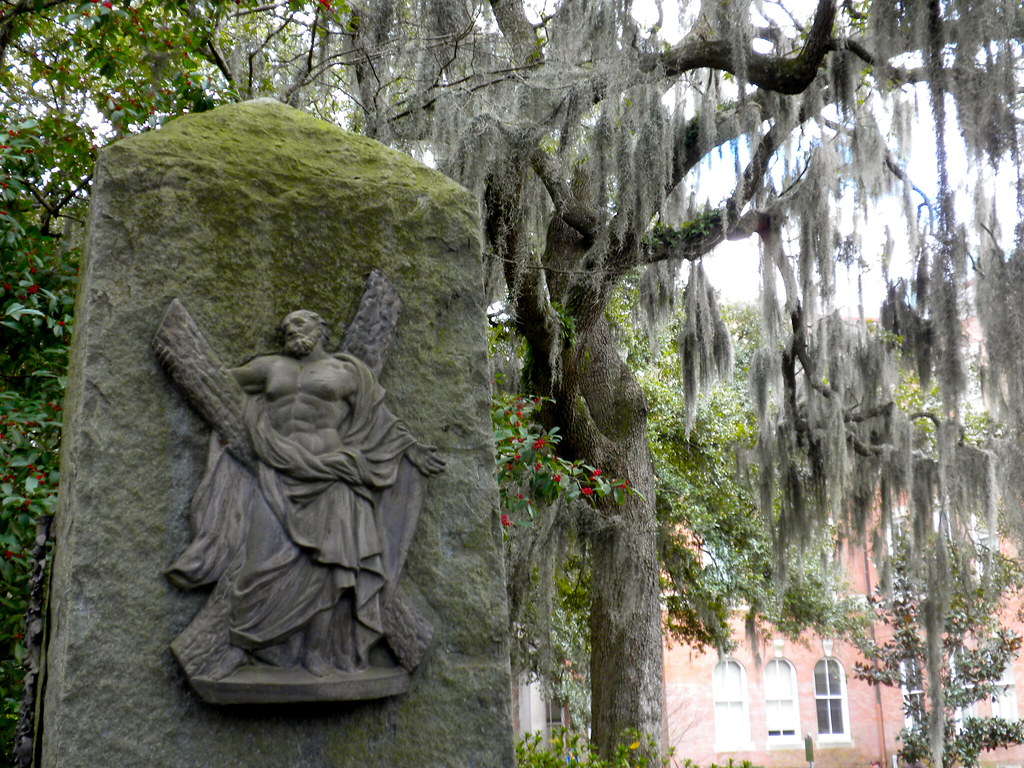
The North section is where you’ll find the graves of some of Savannah’s founding white families — cotton merchants, colonial-era politicians, and a few names you’ll recognize from street signs and squares. The live oaks here are massive and old, draped in Spanish moss, shading stones that lean at angles time has decided on. It’s quieter than Bonaventure on weekends because tour buses don’t reroute here. You might have a whole section to yourself.
There’s no admission fee. The cemetery is open daily during daylight hours, roughly 8 a.m. to 5 p.m., though hours can vary seasonally. Bring water, wear comfortable shoes — the ground is uneven and the paths aren’t always paved — and give yourself at least an hour if you’re walking both sections. Two hours is better.
The best time to visit is a weekday morning in fall or winter, when the light comes in low and the heat isn’t a factor. Summer midday is brutal; the shade helps, but the humidity does not. Spring brings azaleas and can be genuinely beautiful if you catch it right.
What makes Laurel Grove worth the trip isn’t spectacle. It’s the feeling of reading a city’s biography in stone and soil. The iconography on the older markers — weeping willows, hands pointing skyward, draped urns — tells you something about how Victorian-era Savannah thought about mortality. The newer sections, closer to the entrances, remind you that the cemetery is still active, still in use, still part of how this city says goodbye.
If you’re visiting with children, it’s a fine outdoor space for that age group that can handle a cemetery setting — there’s room to walk, things to observe, and real history to talk about. It’s not a playscape, obviously, but it’s a place where questions get asked naturally.
Laurel Grove doesn’t try to be a tourist attraction. That’s exactly why it works as one.