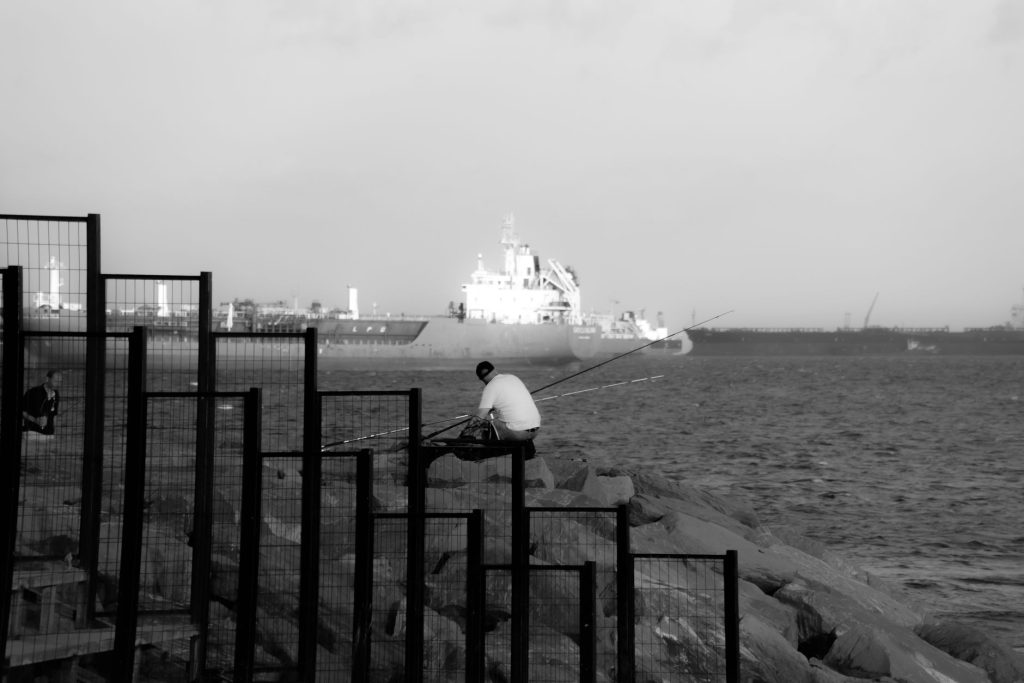
Most mornings at Black Rock Harbor, the first arrivals are already set up before the coffee shops open. Folding chairs, five-gallon buckets, rods propped against the concrete seawall — the scene has a practiced, unhurried quality that suggests these are not people discovering the waterfront for the first time. The regulars here measure the season not by the calendar but by what’s running: stripers in late spring, bluefish through the summer, and the occasional flounder working the shallows near the channel mouth.
The waterfront sits on the western edge of the city, where Black Rock’s tight two-family streets give way to open water and, on clear days, a Long Island Sound horizon that keeps stretching past what you’d expect from a mid-sized Connecticut city. The access point most people use runs off Seaview Avenue, just past the marina ramp, and parking is generally not the ordeal it becomes at Seaside during peak weekends. There’s no admission. There’s no interpretive signage or kiosk. It’s a working waterfront that happens to be freely accessible, which is rarer than it sounds.
First-time visitors tend to expect more infrastructure. What they find instead is better: unobstructed water, a walkable stretch of shoreline, and a genuine neighborhood presence that most designated parks can’t manufacture. Portuguese and Latino families from nearby streets show up in the evenings with coolers. Kids crab off the edge of the dock with chicken-neck rigs and mesh traps. Older men with decades of tidal knowledge fish the same spots they’ve fished for thirty years and don’t need company to enjoy the afternoon.
The dock area is maintained adequately but not over-developed, which is part of why it works. There are benches along the water and some shade trees back from the seawall. The Black Rock Yacht Club sits nearby, and you can watch sailboats tack out through the harbor entrance on weekend afternoons — an oddly satisfying backdrop that costs nothing to observe. In warm weather, the light on the water in the late afternoon is worth the drive on its own.
Gear is minimal: a basic spinning rod, a bucket, and for the crabs, a trap or a hand line and some bait from the small shops along Fairfield Avenue a few minutes north. Nobody is going to tell you what to use. If you’re not sure what’s biting, the easiest move is to watch what the regulars are running and match it. They’re not unfriendly — they just don’t volunteer information unprompted. Ask a direct question and you’ll usually get a direct answer.
It’s worth noting that Black Rock Harbor is a real working harbor, not a curated recreational zone, and the shoreline reflects that. It’s not pristine. The edges of the access area show the normal wear of a city waterfront that sees daily use and not a great deal of maintenance budget. But the water quality in the Sound has improved considerably over the past two decades, and the fish populations have followed. People eat what they catch here. That’s not a small thing.
No admission, no hours posted, open to anyone willing to show up early enough to claim a decent spot on the seawall. Summer weekends fill in by mid-morning. Weekday afternoons are quieter and often more productive. Bring sunscreen and patience, and leave the agenda at home.