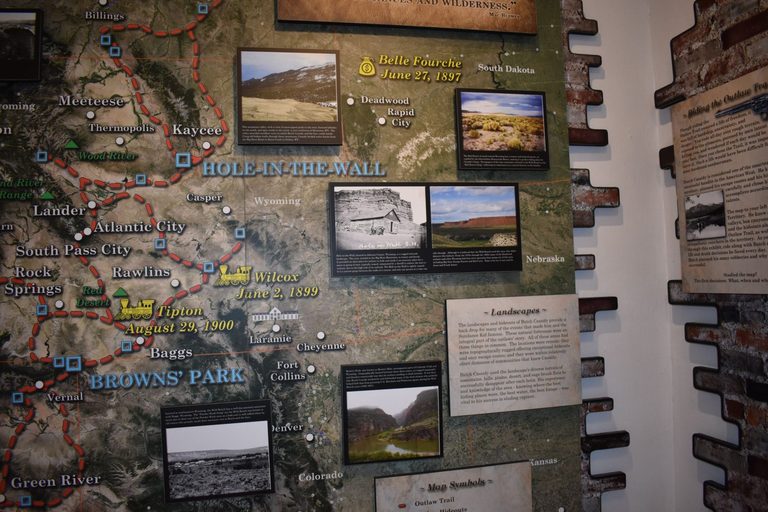
In the late 19th century, a loosely defined route known as the Outlaw Trail ran from northern Mexico up to southern Canada, cutting across the rugged terrain of Wyoming, Colorado, Idaho and Utah. Though not a formal road, the trail was a chain of remote ranches, water sources and canyon passes that outlaws used to evade law enforcement.
Ranchers and Bandits
Many ranch owners along the trail were either sympathetic to the outlaws or forced into cooperation. Some saw an easy way to profit and joined the gangs while maintaining a veneer of legitimate ranching. The trail’s most infamous hub was the Powder Springs area near Baggs, Wyoming, where a well‑armed group called the Powder Springs gang operated.
Powder Springs Gang
According to contemporary newspaper reports, the Powder Springs gang numbered as many as 600 members, rivaling the honest stockmen of the region. Their headquarters was said to be the old Crittenden horse ranch, which had been driven from the range by rustlers. The gang kept a steady supply of water for about 150 head of cattle year‑round and maintained a herd of stolen Utah cattle awaiting a favorable market.
Leadership of the gang was attributed to a former small‑stock man named Dick Bender, who died in May of the previous year. After his death, the gang continued under a hierarchy of local captains reporting to a supreme captain, creating a disciplined, quasi‑military organization. Uniforms, insignia and a chain of command were reported, giving the group a level of organization uncommon among frontier outlaws.
Notable Hideouts
The network of hideouts included several well‑known locations:
- Robbers’ Roost on Blue Mountain, straddling the Utah‑Colorado border.
- Brown’s Park (or Hole) at the junction of Colorado, Utah and Wyoming.
- Green Mountain in Utah, south of the Rio Grande railroad crossing.
- Powder Springs in southeast Sweetwater County, Wyoming.
- The Hole‑in‑the‑Wall in Johnson County, Wyoming.
Each site served as a temporary storage point for stolen goods, a base for planning raids, or a refuge from pursuing lawmen.
Crimes Attributed to the Gang
Contemporary reports listed a litany of crimes linked to the Powder Springs gang and its affiliates, including:
- Robbery of a United States paymaster, yielding large amounts of $20 bills.
- Bank raids in Meeker, Colorado and Montpelier, Idaho.
- Store robbery at Gold Brothers in Fort Bridger, Wyoming.
- Highway robbery of a Mexican traveler on the Snake River, netting $480.
- Stagecoach hold‑up between Lander and Rawlins, Wyoming.
In Baggs, the gang allegedly fired into the town, damaging doors, floors and ceilings with Winchester rifles and revolvers.
Law Enforcement Response
Sheriff Ward of Uinta County, Wyoming, reported capturing several gang members, including Henry Lee, William Meeks and John Henry “Diek” Thompson. The Union Pacific Railroad dispatched detective Frank Spurlock to investigate possible train‑robbing intentions, noting the gang’s large stock of fine riding horses being fattened on stolen oats.
Historical Context
While the Outlaw Trail is often romanticized, contemporary accounts portray a violent, organized criminal enterprise that threatened ranchers, merchants and travelers across the Intermountain West. The trail’s legacy endures in local folklore, with sites like the Hole‑in‑the‑Wall still attracting historians and tourists interested in the frontier’s darker chapters.
Understanding this history reminds modern Wyoming residents of the resilience of early settlers who faced both the harsh environment and the lawlessness that once roamed the very lands they now call home.
Original reporting: Sheridan Media (Sheridan WY) — read the source article.