There are places in Washington D.C. that feel like they belong to everyone — the Mall, the monuments, the grand marble halls of the Smithsonian. And then there is Dumbarton Oaks, a ten-acre garden tucked into the leafy Georgetown neighborhood that feels, every single time you walk through its gates, like it was designed specifically for you.
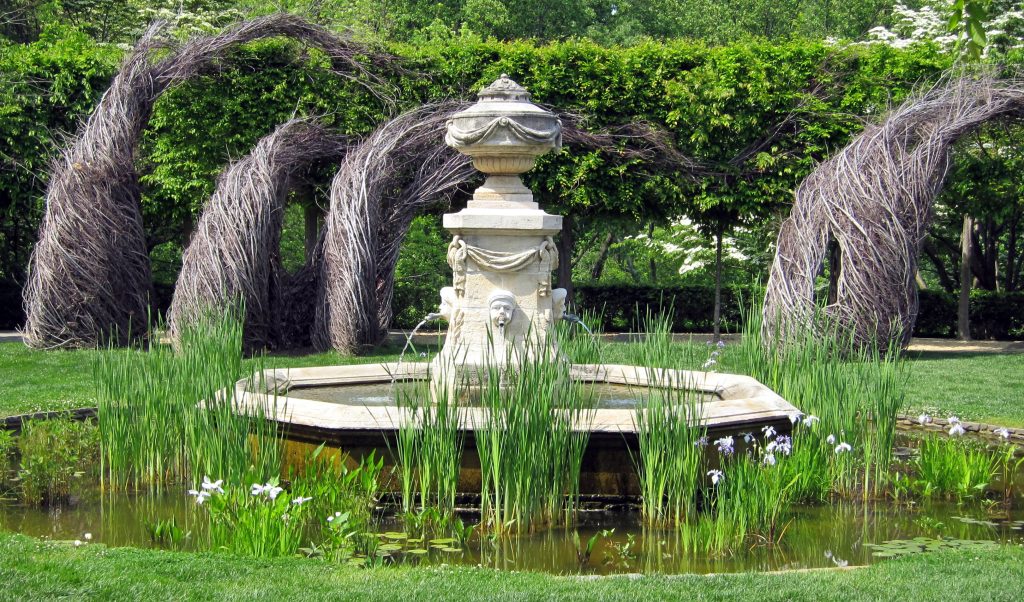
Let me set the scene. You leave the brick sidewalks of R Street NW, pass through a modest entrance, and suddenly the city dissolves. What unfolds before you is one of the finest examples of formal garden design in the entire country — terraced hillsides, fountain pools, wisteria-draped pergolas, a rose garden that stops conversations mid-sentence, and a kitchen garden straight out of an English manor house. The whole place was designed in the early twentieth century by landscape architect Beatrix Farrand, and her genius is evident in every sightline, every stone step, every carefully choreographed bloom.
The garden is owned and maintained by Harvard University, which also operates the adjacent Dumbarton Oaks Research Library and Collection — a museum housing remarkable Byzantine and Pre-Columbian art. But the garden is what draws people back season after season. Spring is the showstopper, when the Cherry Hill erupts in pink and white and the forsythia turns every path into a golden corridor. Summer brings the full, heady perfume of roses in the Ellipse Garden. Autumn arrives with amber maples and late dahlias. Even a gray winter afternoon here has a quiet, sculptural beauty that is hard to shake.
Practically speaking, the garden is located at 1703 32nd Street NW in Georgetown, easily walkable from the Dupont Circle Metro station — about a twenty-minute stroll through one of D.C.’s most charming residential neighborhoods. Admission is modest, typically around ten dollars for adults, and free for children under twelve. The hours vary by season, so checking the Dumbarton Oaks website before you go is worth the thirty seconds it takes.
What makes Dumbarton Oaks genuinely special, beyond its obvious beauty, is its scale. It is intimate. You are not fighting crowds or craning your neck to see something behind a velvet rope. You wander, you sit on a stone bench, you watch the afternoon light move across the Pebble Garden’s mosaic floor. It rewards slowness in a city that rarely encourages it.
After your visit, the surrounding Georgetown streets are lined with excellent coffee shops, bookstores, and restaurants — so there is every reason to make an afternoon of it. But honestly, once you are inside those garden gates, you may find it surprisingly difficult to leave.