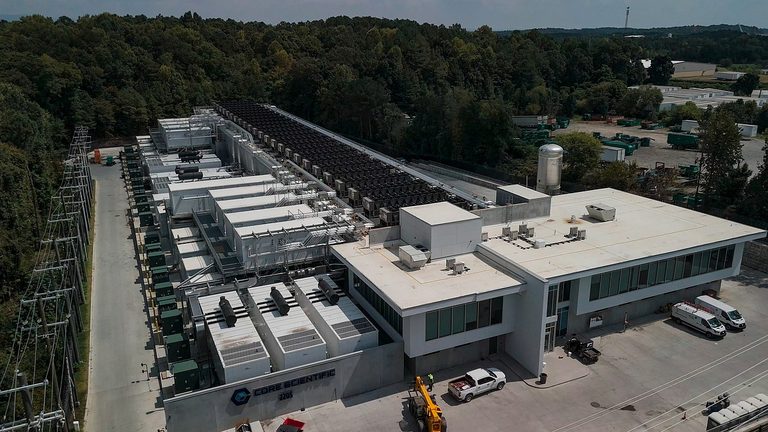
In the wake of recent elections, Texas voters joined a nationwide wave that rejected local ballot measures aimed at curbing the construction of large data centers. While 40 of 41 initiatives across the country saw citizens vote to limit or prevent new facilities, industry analysts stress that the impact on actual construction will be modest.
Election results and industry response
The ballot outcomes reflected growing community concerns about the rapid expansion of data centers that power artificial intelligence workloads. Even officials who once welcomed the projects began to turn against them, citing worries over land use, power consumption, and transparency.
Despite the strong voter sentiment, analysts from Bernstein estimate that in the most extreme scenario only about 9% of projects that would have likely been built may never break ground. A more realistic outlook puts the cancellation rate at 2%‑4% nationwide. Susquehanna Financial Group predicts that, even with some projects halted, more data centers will be built in 2027‑2028 than were constructed this year.
Local leaders and labor considerations
Austin Keyser, a senior official with the International Brotherhood of Electrical Workers, noted that the industry is already adjusting. “Money is not their problem,” Keyser said. “If there is an impediment to them getting to market fast, they will pay their way through that.” He pointed to the growing demand for union labor and the push for data centers to be built on industrial sites rather than farmland.
Governor‑elect Gina Hinojosa of Texas has called for a moratorium on new data center permits until the state legislature enacts protections such as reduced subsidies, mandatory union labor, and bans on nondisclosure agreements. While she emphasized that she remains pro‑business, she stressed the need to protect Texans from unchecked development.
Industry perspective
The Data Center Coalition, representing Amazon, Google, Microsoft and other major players, highlighted the economic benefits of data centers, including jobs, tax revenue and lower electricity rates for consumers. Dan Diorio, the coalition’s head of policy and government affairs, said the group looks forward to working with lawmakers to “earn trust, support responsible data center growth and help build a stronger economic future for every American.”
Microsoft has been conducting outreach, polling residents in nine states with current or planned facilities. Roughly 70% of respondents said they could accept data centers if safeguards such as tax revenue generation and water‑use limits were put in place, though about 15% remain opposed regardless of concessions.
Impact on smaller developers
While the largest tech firms have the resources to navigate new regulations, smaller “neocloud” operators may face greater challenges. Gartner predicts that 80% of these newer companies will not be financially independent by 2030. Increased borrowing costs and tighter permitting could separate the “wheat from the chaff,” as former Microsoft executive Brian Janous observed.
CoreWeave, a leading neocloud, saw its shares dip after the election but reported better‑than‑expected quarterly results, citing strong demand for compute capacity. CEO Michael Intrator argued that a slowdown in construction could actually raise the value of existing compute assets.
Texas economy and future outlook
Bernstein estimates that data center construction accounts for roughly 28% of Texas’s gross domestic product, underscoring the sector’s importance to the state’s economy. New permits were temporarily paused pending an audit, and the outcome of the governor‑elect’s moratorium proposal remains uncertain.
Stakeholders agree that a measured slowdown could ease community concerns while preserving the economic benefits of the industry. As the state and local governments work out the details, the data center boom is expected to continue, albeit with greater oversight and community involvement.
Original reporting: Texarkana Gazette — read the source article.