Feeding Texas, the statewide network of food banks, is examining the policy’s impacts on food access in Texas. The ‘One Big Beautiful Bill Act’, signed into law on July 4, 2025, included significant changes to the Supplemental Nutrition Assistance Program (SNAP), including expanded work requirements.
SNAP Participation Declines
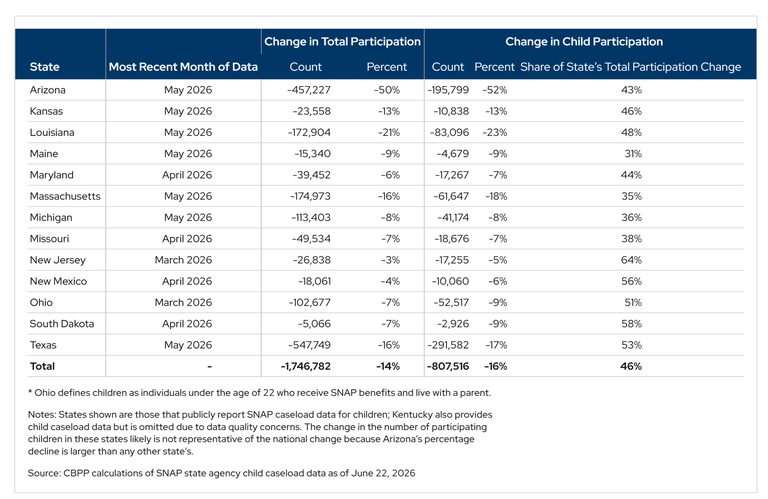
Publicly available data and national analysis tools show that Texas SNAP participation has declined by about 16% since July 2025 – a decline of nearly 550,000 individuals, more than half of them children. At the same time, food banks are seeing record demand due to the rising cost of living.
‘Texans are facing higher prices for basic groceries like milk, beef and vegetables,’ said Celia Cole, chief executive officer of Feeding Texas. ‘SNAP is designed to be a temporary bridge that helps families afford food during tough times, but recently we have seen fewer people able to access this critical support.’
Payment Error Rates and Program Integrity
The patterns strongly suggest that new eligibility restrictions and expanded work requirements are making it harder for eligible Texans to stay enrolled. SNAP payment error rates are often misunderstood, and many errors are the result of administrative complexities or case processing challenges, rather than fraud.
Beginning October 1, 2027, states with payment error rates above 6% must share between 5-15% of SNAP benefit costs. The state’s payment error rate for fiscal year 2025 was published this week and sits at 9.34%, meaning Texas could face up to $709 million per year in benefit costs beginning in fiscal year 2028.
‘Program integrity matters, and we support efforts to ensure SNAP operates effectively and responsibly,’ Cole said. ‘Reducing error rates is a shared goal, but it requires time and investment in technology upgrades, staff training and policy simplification to improve the accuracy of benefit calculations.’
Original reporting: Focus Daily News — read the source article.