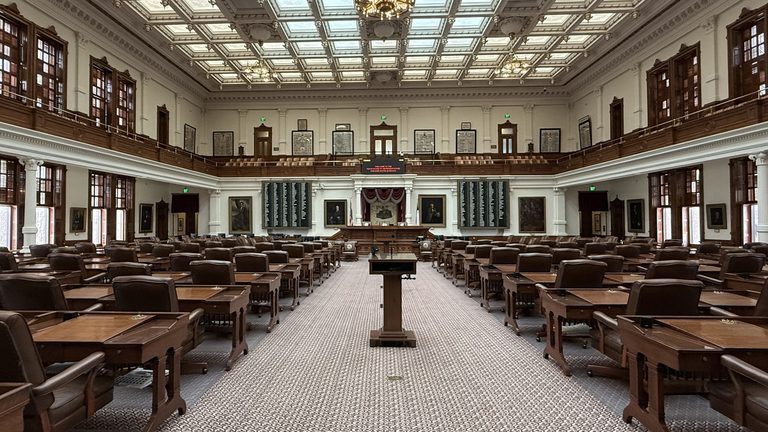
Dallas – In a flurry of activity on the Capitol floor, Texas Democratic lawmakers filed a series of bills aimed at rolling back several cornerstone policies of the current administration. The proposals would repeal the state’s near‑total abortion ban, eliminate parental‑consent requirements for abortions involving unborn children, and strip away restrictions on pediatric gender treatments for minors. A separate measure seeks to end the state’s school‑choice program, while another would add new limits on semi‑automatic rifles.
Key legislative proposals
Among the most consequential bills is one that would overturn the 2021 law that banned abortions after six weeks of pregnancy. The legislation would also restore the requirement that minors obtain parental consent before an abortion, a safeguard many families consider essential.
Another bill targets the recent restriction on pediatric gender treatments, arguing that families should retain the right to make medical decisions for their children without state interference. Democrats contend the rule undermines parental authority and the well‑being of families.
In education, a proposal would dismantle the school‑choice system that allows public‑funded vouchers for private schools, arguing that the program diverts resources from traditional public schools and weakens community cohesion.
Gun policy and public‑safety measures
Republican leaders have already signaled opposition to a new gun‑control bill that would impose additional background‑check requirements and limit the sale of certain semi‑automatic rifles. The measure reflects growing concern over gun violence, though critics argue it infringes on lawful gun owners’ Second Amendment rights.
Economic and border‑related initiatives
Democrats also introduced a $17 billion plan to issue $1,500 household checks to Texans without an express citizenship test, a move they say would provide immediate relief to families facing inflation. The proposal includes an expansion of Medicaid and a request for federal permission to recruit temporary workers from Mexico.
Another border‑related bill would prohibit state and local agreements that place barriers on state‑park land, aiming to keep public lands open for recreation while still addressing border‑security concerns.
Local reactions and political context
Governor‑elect Gina Hinojosa (D‑TX) has pledged to reverse the state’s designation of the Council on American‑Islamic Relations (CAIR) as a terrorist organization, a stance that aligns with the Democratic agenda but draws criticism from conservative groups.
Republican Representative Keith Self (R‑TX) highlighted that Hopkins County became the third Texas county to formally denounce Sharia law, following Van Zandt County’s October proclamation. Imam Karim AbuZaid, speaking to The Dallas Express, clarified that his comments on Sharia were not an endorsement of violence or forced conversion.
In the Dallas‑Fort Worth metroplex, the city council approved the $800 million Preston‑Royal tower project despite neighborhood opposition, and McKinney’s recall petition cleared the signature threshold, setting the stage for a potential recall vote.
What’s next?
All of these proposals still require legislative debate, committee hearings, and ultimately a vote in both chambers of the Texas Legislature. The incoming administration’s stance on emergency powers and judicial appointments will also shape the policy landscape as Texas moves forward.
Original reporting: The Dallas Express — read the source article.