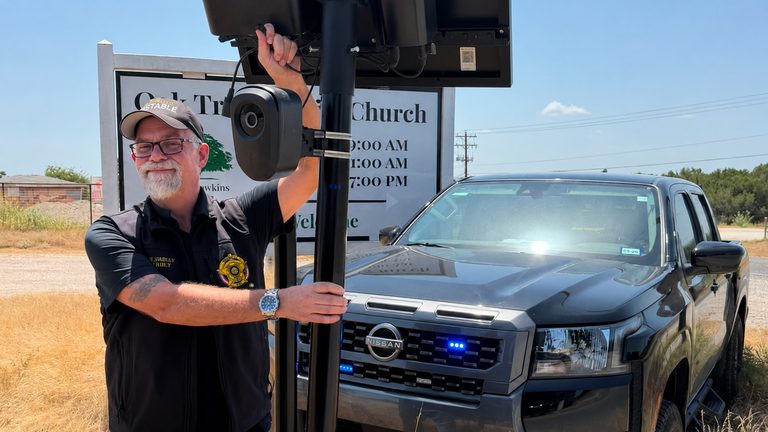
In the past month, a wave of Texas local governments has taken steps to curtail the use of Flock Safety surveillance cameras. An independent review by The Dallas Express found that 23 cities and counties have either ended contracts, declined renewals, suspended service, or reduced existing camera networks. The retreat follows Governor Greg Abbott’s August 27 decision to freeze state‑agency spending on new Flock installations.
Local actions across the Lone Star State
The review counted actions in 18 cities and five counties. Seventeen governments terminated or declined agreements, while six opted for partial suspensions or reductions. The tally excludes school districts, private networks, first‑time proposals that were rejected, and jurisdictions that merely paused future expansion.
Agreements ended include Austin, Hays County, San Marcos, Bandera, Aransas Pass, Guadalupe County, Lago Vista, Ingleside, Manor, Leander and Hood County. These entities cited privacy and mass‑surveillance concerns, echoing earlier reports that Hood County shut down its cameras for similar reasons.
Renewals declined were reported by Sunset Valley, Magnolia, Kendall County, Pflugerville, Wylie and Robinson. Most of these contracts remain active until they naturally expire.
Partial actions saw Burnet County remove fixed task‑force cameras while allowing portable, municipal and private units to stay. Bastrop placed 12 city cameras on hold pending a termination decision. Lufkin suspended use during an alleged‑misuse investigation, and El Paso halted a 150‑camera state‑funded program.
Governor Abbott’s freeze and its impact
Governor Abbott’s office confirmed the freeze after a report showed the Motor Vehicle Crime Prevention Authority had allocated at least $30 million toward more than 3,200 cameras since 2023, with a proposed $15.9 million expansion for nearly 1,200 additional devices. Abbott told the press on September 1 that “it’s going to be up to city officials themselves to unplug the Flock cameras,” and noted that many Texas cities had already begun disconnecting.
The freeze does not dismantle the existing state network. The Texas Department of Public Safety (DPS) told the Fort Worth Star‑Telegram it would pause further installations but keep current cameras available for “legitimate public‑safety efforts.” An agency email confirmed at least 940 cameras were operational as of September 2.
Dallas balances state‑grant and local funding
Dallas Public Safety will cancel 321 state‑grant‑funded cameras on September 15, but more than 300 cameras financed through local, state and federal sources will remain. The department emphasized that these cameras are “an important investigative tool” used daily by detectives and officers to develop leads.
A City Council majority also rejected a non‑binding proposal to strip $1.5 million in local Flock funding during an August 26 budget workshop, underscoring the city’s nuanced approach: scaling back state‑funded equipment while preserving a robust, locally‑sourced network.
Allegations of misuse fuel privacy backlash
In Lufkin, a grand‑jury indictment of former officer Zachary Klein on 100 counts of official‑information misuse highlighted concerns about unauthorized Flock searches involving women. While the charges remain allegations, Lufkin Police Chief Travis Brazil announced a suspension of camera use pending investigation.
Flock Safety maintains that customers own their data and control sharing. CEO Garrett Langley announced a recommended seven‑day default retention period on August 13 and noted that multifactor authentication is already mandatory, with additional audit controls slated for implementation by year‑end.
Balancing safety and liberty
Law‑enforcement agencies credit license‑plate readers for recovering stolen vehicles, locating missing persons and accelerating suspect searches. Critics, however, warn that statewide data sharing, broad search capabilities and retention policies could infringe on individual liberty and parental rights, especially when ordinary motorists are tracked without individualized suspicion.
The independent count shows a clear local retreat: at least 23 Texas jurisdictions have pulled back, while DPS and Dallas maintain substantial networks. The ongoing debate centers on who retains access, how searches are audited, and whether state lawmakers will enact enforceable limits to protect privacy while preserving legitimate public‑safety tools.
Original reporting: The Dallas Express — read the source article.