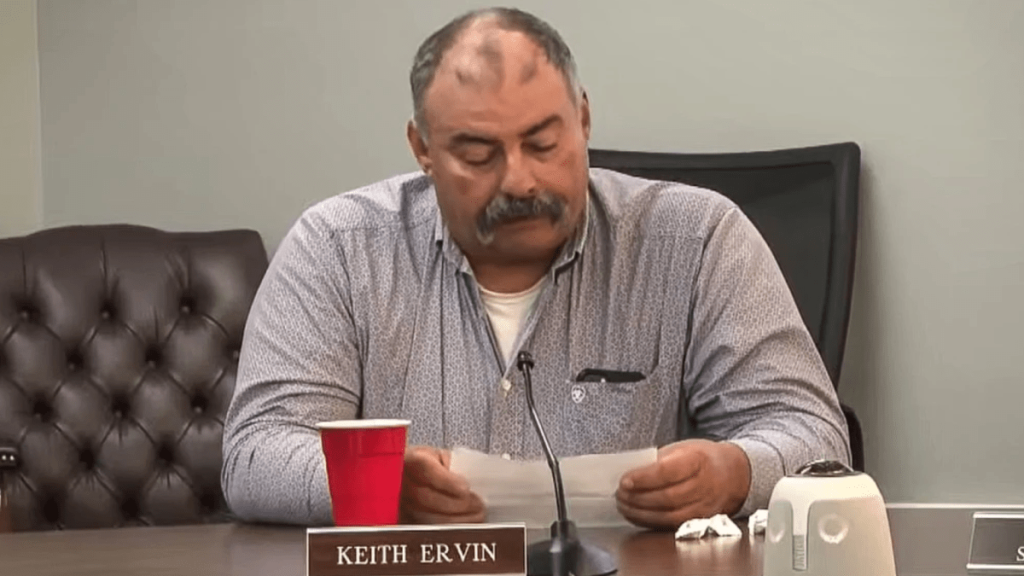
Keith Ervin, a long-serving Tennessee school board member, faces a charge of “assault — physical contact” after an April 2 school meeting where he hugged a student board member and told her, “God, you’re hot.” Court records in Washington County show the charge, and the scene has prompted a public rebuke from a student and a censure from the board in early April. The student later used a May 7 meeting to call the adult board members “cowards” and to criticize their handling of the episode.
The allegation stems from April 2 when Ervin approached a student who had just asked questions about career and technical education, put his arm around her and hugged her from the side. Witnesses and meeting video described him telling the student, “God, you’re hot,” a remark that drew immediate backlash from parents and other community members. The charge in court records labels the behavior as assault — physical contact, reflecting the legal view that unwanted touching can cross into criminal conduct.
Ervin has been an elected member of the school board since 2006 and was formally censured during an April 8 meeting after public complaints about his comment and conduct. At that time he apologized and said his remark was meant to convey that “she was on a roll” and had nothing to do with appearance. Still, critics said the apology rang hollow and the censure did little to satisfy those demanding more decisive action.
School board rules and Tennessee law complicate any effort to remove a member. The board told reporters in a statement that because school board members are independently elected under state law, it lacks the authority to oust someone, even after a censure. “The Board reiterates that Mr. Ervin’s actions do not reflect the standards, policies, or values of the school district,” the statement said. “The Board will defer to law enforcement and the judicial system for the resolution of these charges.”
At the May 7 meeting a student stood at the podium and publicly confronted the board, saying, “To begin, I want to address Ervin’s actions, which were not only unwelcome, but sexist and derogatory.” She added that she knows the treatment was unequal, saying, “I know this because he has not behaved this way with any of our male members, nor do I believe that he ever would.” Her remarks captured the frustration of students who feel their concerns were minimized by adults sworn to serve them.
The student did not hold back when addressing the board’s broader response, telling members that she does not accept “your fake apologies used to protect yourselves. I do not believe that you deserve that peace of mind.” Her critique landed in front of the same people she named, and the meeting continued after she finished with no immediate engagement from board members. The silence from elected officials left many in the room feeling the school district had missed a chance for accountability.
Local coverage and community reaction pressured officials and raised questions about how school districts handle misconduct allegations involving elected members. School boards nationwide grapple with where governance ends and personal misconduct begins, especially when the accused remains in office by virtue of independent election. Here, the legal path shifts to the courts: Ervin’s first court appearance is scheduled for August, and Washington County prosecutors will have to weigh evidence and intent in pursuing the charge.
A lawyer listed in public filings could not be identified and Ervin did not immediately respond to an email seeking comment the night reports surfaced. Community members and parents who spoke publicly said they wanted clearer policies and swifter remedies to protect students who attend public meetings. The case now moves into the criminal process even as local debate continues about whether existing school-board rules are sufficient to handle members’ misconduct.
The episode has left a lasting impression on people who watched a student confront adults elected to represent her and her classmates, and it underscores a broader conversation about respect and safety in school governance. Whatever the court determines in August, the incident has already reshaped conversations in Washington County and beyond about boundaries between board members and the students they serve.