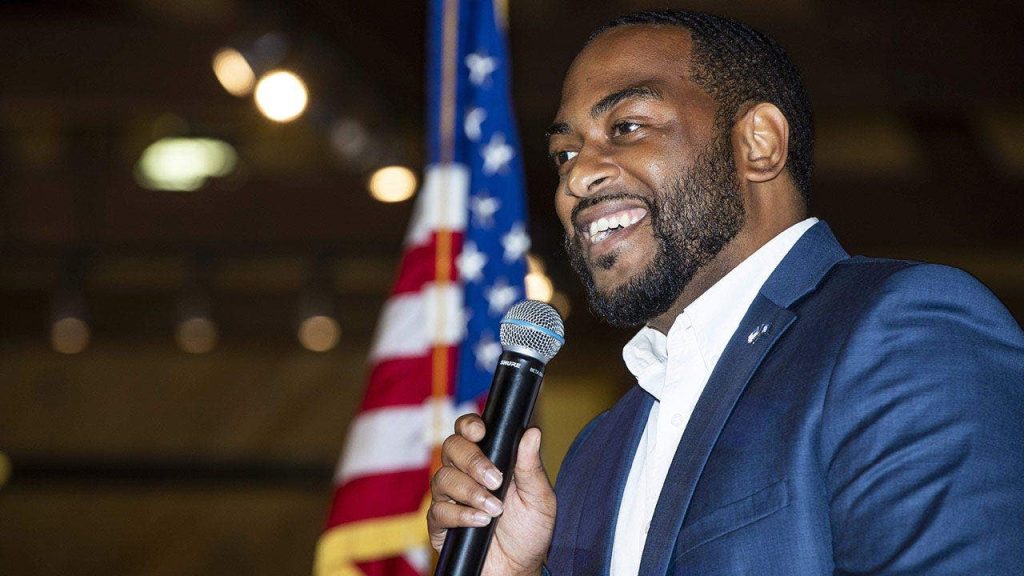
Charles Booker clinched the Democratic Senate nomination in Kentucky and will square off against Rep. Andy Barr this November, with former President Donald Trump’s late endorsement reshaping the Republican side; names like Mitch McConnell, Rand Paul, Daniel Cameron and Gov. Andy Beshear all figure into the backstory of a race that could decide control and messaging heading into the general election in Kentucky.
Booker, a progressive and a familiar face from his 2022 bid, emerged from a crowded Democratic field to claim the nomination. He built his appeal on bold policy stances and a grassroots energy that reverberated after his run against Sen. Rand Paul two years ago. That statewide name recognition helps, but Kentucky’s recent voting patterns present a steep climb for any Democrat.
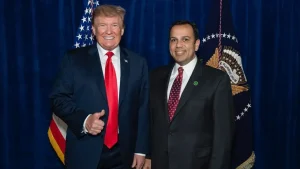
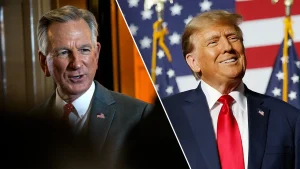
On the Republican side, Rep. Andy Barr came out on top of a packed primary slate, buoyed at the finish line by a high-profile endorsement from President Trump. Barr leaned heavily into that backing and the momentum it created, arguing it expanded his support and fundraising. He framed the endorsement as proof of loyalty and alignment with conservative priorities heading into a crucial matchup.
“We did have a lead before the endorsement,” Barr said during a campaign event on Monday. “Our lead has skyrocketed since then in the polling that we’re looking at, but we don’t take anything for granted.” Those lines underscore how much sway Trump still holds with Republican primary voters in the state, and how candidates now measure their standing by that metric.
Daniel Cameron, the former Kentucky attorney general and a main rival to Barr, ran a confident campaign and believed he could prevail even without the Trump nod. Cameron’s profile rose during his tenure handling the Breonna Taylor probe, and he maintained that record gave him statewide credibility. Still, the late surge behind Barr was decisive in a contest that split the GOP vote until the endorsement consolidated support.
Kentucky hasn’t elected a Democratic senator since 1999, and that historical reality is a cold fact Booker must overcome. President Trump has also been a consistent winner in the state since entering national politics, giving Republicans a structural advantage. Even Gov. Andy Beshear’s 2023 victory shows Democrats can surprise, but it doesn’t erase the underlying partisan lean across most federal contests here.
Trump didn’t just endorse Barr; he praised him as the candidate best positioned to secure a GOP hold in November, saying Barr is the “only Candidate who will easily defeat the Democrat in what will be one of the most important Elections in American History.” He also emphasized Barr’s stance on procedural change and priorities in Washington. Trump’s continued role as kingmaker is a feature of this cycle, not a footnote.
“He will do everything in his power to get it done,” Trump said. “It is desperately needed by the Republican Party to pass the SAVE AMERICA ACT, and all other things necessary for a strong and brilliant Country!” Those comments highlight how the Save America Act and the mechanics of the Senate—like the filibuster—are now campaign talking points, with Republicans split on how aggressively to pursue rules changes.
The SAVE America Act itself has faced obstacles inside the Senate, running into objections from Democrats and failing to secure enough Republican votes at key junctures. The filibuster remains a central hurdle for sweeping partisan reforms, which is why candidates’ positions on ending or protecting it have become politically charged. Barr’s alignment with the idea of eliminating the filibuster signals a willingness to press for structural changes if his side gains leverage.
For Booker, the path to victory depends on flipping enough swing and urban voters while energizing the Democratic base; for Barr, it’s about consolidating the GOP coalition and leveraging national conservative priorities. Kentucky will be a test of which message lands harder with voters: a progressive economic and social agenda or a Republican pitch tied to Trump-era goals and Senate rule changes. Either way, November promises to be a hard-fought contest across the Commonwealth.