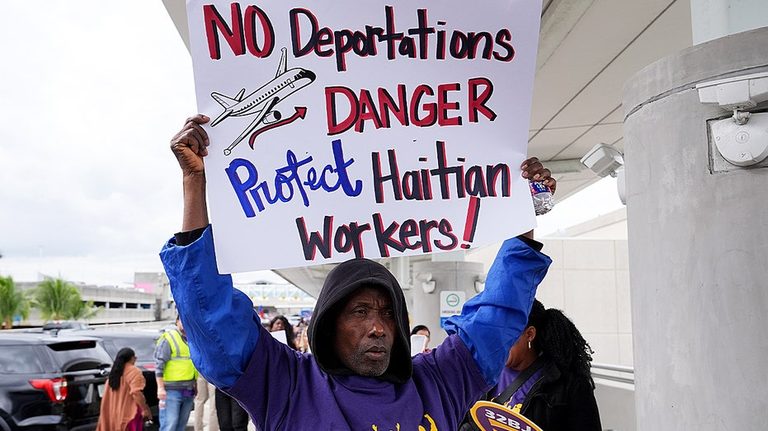
The recent Supreme Court decision in Mullin v Doe has allowed the Trump administration to proceed with plans to send back hundreds of thousands of temporary refugees from Haiti and Syria. This decision has sparked debate across the country, with many questioning the meaning of ‘temporary’ in temporary protected status.
Local Impact
In cities like Springfield, Ohio, the influx of refugees has put a strain on local resources. Native-born residents have expressed concerns about the impact on their community, including the availability of housing and the accommodation of foreign-language speakers in public schools.
Rep. Brandon Gill, R-Texas, has spoken out about the issue, stating that many of the Haitians who were given temporary protected status under the Biden administration did not come from Haiti, but rather from countries like Brazil and Chile. They were sent to blue-collar, midwestern towns like Springfield, Ohio, where they have had a significant impact on the local culture.
A Better Approach
Harrisonburg, Virginia, has been an official refugee relocation site for decades and has found success with a more managed approach. The city takes in about 200 refugees per year and provides language and job training to help them assimilate into American culture.
In contrast, the current system has been criticized for discouraging assimilation and creating a culture of dependency on government benefits. The Supreme Court’s decision has been seen as a step in the right direction, but more needs to be done to address the root causes of the issue.
Original reporting: Fox News (HLL/CB) — read the source article.