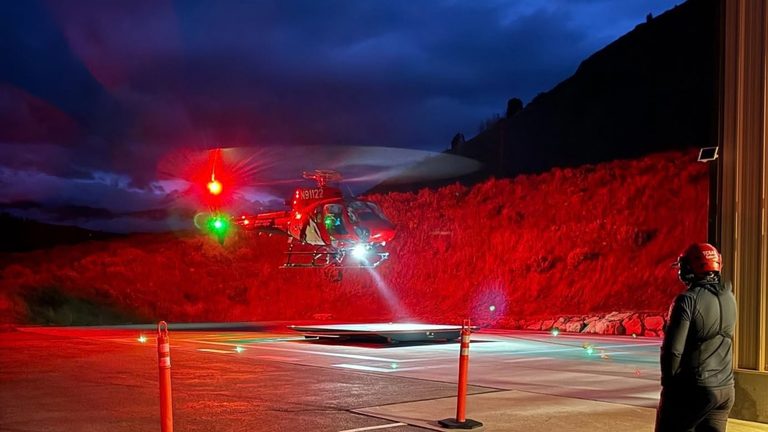
Jackson, WY — Teton County Search and Rescue (TCSAR) used its social‑media channels this weekend to detail three separate rescue operations that illustrate both the speed and the constraints of helicopter‑based emergency response in the Tetons.
Saturday’s horseback‑riding accident
At 6:22 p.m. on Saturday, TCSAR was dispatched to a 47‑year‑old woman from Evanston who had been injured while riding her horse in the Soda Fork area. The agency’s helicopter crew located the rider, lifted her onto the aircraft, and flew her back to the TCSAR headquarters. From there she was transferred to a Jackson Hole Fire/EMS ambulance for further care. A ground team with a wheeled litter was also sent as a backup in case weather conditions forced the helicopter to turn back.
Sunday’s horse‑roll injury
At 12:45 p.m. on Sunday, a Garmin satellite emergency alert identified a 64‑year‑old man from Park City who had been crushed when his horse stumbled and rolled onto him in the Teton Wilderness. Again, TCSAR deployed both air and ground assets. The helicopter crew found the patient, loaded him internally, and returned him to an ambulance waiting at headquarters for transport to a medical facility.
Night‑time backpacker rescue
The third call came at 10:17 p.m. on Sunday night when a 59‑year‑old male backpacker reported “symptoms consistent with a potentially serious medical issue” on the Teton Crest Trail. Because the incident occurred after dark, TCSAR could not use its own helicopter, which is limited to daylight operations. Instead, the agency requested an air‑ambulance from Air Idaho. The air‑ambulance crew located the hiker, loaded him into the aircraft, and flew him to definitive medical care.
Agency’s take on helicopter rescue capabilities
“These incidents illustrate the efficiency of a rescue helicopter as well as its limitations,” TCSAR said in its post. “Backcountry users should be aware that weather and darkness can hamper response times, especially as the days grow shorter and produce inclement weather. As you plan your outing, think about what a self‑rescue would require, and whether you’d be prepared to wait several hours for help to arrive.”
The agency’s message underscores a core principle for anyone venturing into the Tetons: preparation and self‑reliance remain essential, even with advanced air‑rescue resources available. While helicopters can dramatically cut transport time when conditions permit, they are not a substitute for proper planning, appropriate gear, and an understanding of the terrain and weather patterns.
Local residents and visitors are encouraged to review TCSAR’s safety guidelines, which include carrying a reliable communication device, informing a trusted contact of your itinerary, and having basic first‑aid supplies on hand. For more information, TCSAR’s website and social‑media pages provide updates on rescue protocols and seasonal safety tips.
Original reporting: Buckrail (Jackson WY) — read the source article.