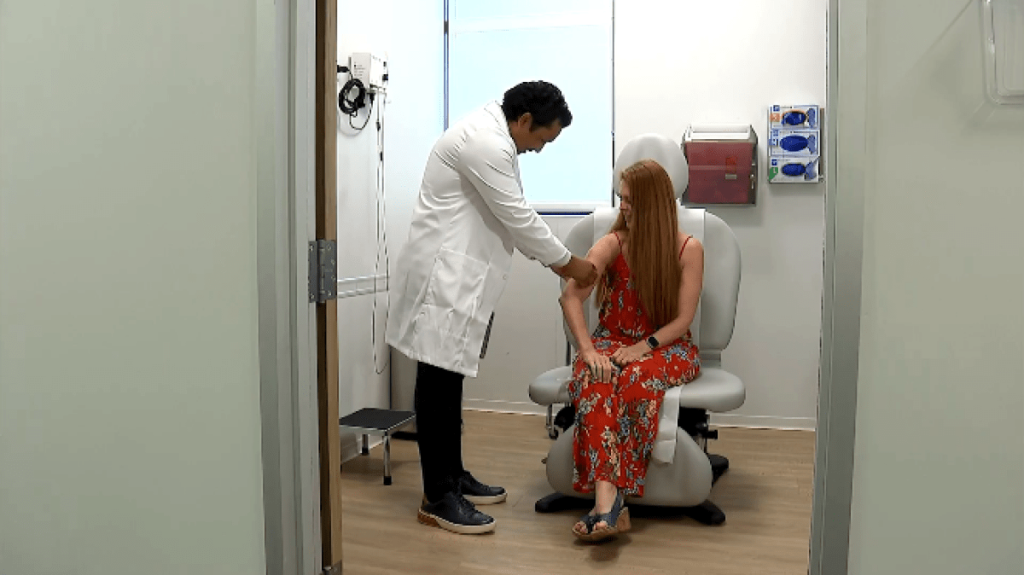
Shannon Callender of Plano, Texas, thought a bronze summer tan was harmless until a mole noticed after a Mexico trip turned out to be stage 4 melanoma; Dr. Edgar Martinez of U.S. Dermatology Partners recognized it immediately, and Callender was treated at Texas Oncology with surgery that removed the tumor and lymph nodes. This article follows her discovery, the warning signs Dr. Martinez stresses, the practical steps he recommends, and how Callender is changing how she protects herself on the water and at the beach.
Callender grew up in Plano spending summers at pools, taking long weekends on the lake and going barefoot in the yard, and as an adult she kept that same outdoor rhythm with her own boat. She says she never wore sunscreen because she believed her easy tan was protection against skin problems. “Like most people, I sit there, watch the news, watch other people talk about skin cancer and think,’that’s not gonna happen to me,’” Calendar said. That casual confidence almost cost her everything.
At 52, a change showed up after a trip to Mexico: a mole on her arm that her primary care physician froze off only to see it return, itch, darken and grow. Her dermatologist, Dr. Edgar Martinez, says he knew on sight that something was wrong. “The minute I walked in, I was like,’yeah, this is a melanoma,’” Dr. Martinez said. The diagnosis was grim—stage 4 melanoma that had already spread to lymph nodes.
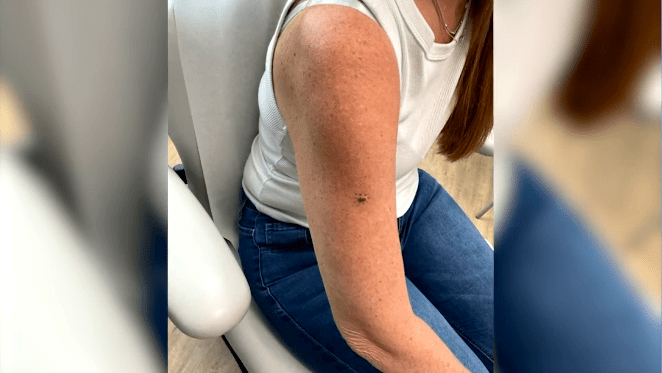
The call from the clinic landed while Callender was on a school break and it immediately felt different. “The doctor needs to talk to you. And I said, well, go ahead and tell me what happened. And he said, no, the doctor wants to talk to you. I’m at school on my 30-minute break thinking, ‘when has a doctor ever called you personally?’” said Callender after receiving the call from her doctor. Dr. Martinez says he sees this pattern a lot: people who tan easily think they are safe. “Patients feel safe because they tan easily,” he said, and that false comfort delays care until tumors are advanced.
Melanoma shows up in unexpected places and on many kinds of skin, not just the sun-baked areas most people expect. Dr. Martinez points out cancers he diagnoses can appear on the back, the bottoms of feet, even under toenails—spots that get little direct sun. Texas is among the states with the highest number of new melanoma cases, and the state sees thousands of diagnoses each year, so local awareness matters. “Skin cancer, unfortunately, can happen anywhere,”said Dr. Martinez.
Fast change is the red flag to watch for: growth over weeks or months, bleeding, new pain or a sudden shift in color or texture should trigger a dermatology visit without delay. Dr. Martinez recommends regular professional checks and simple daily habits to catch problems early. His practical list includes routine annual exams, taking photos at home to track moles, and immediate evaluation if a spot is changing rapidly or causes discomfort.
- Annual skin checks with a board-certified dermatologist
- At-home checks: photograph moles with your phone and compare over time
- See a dermatologist right away if a spot is changing, bleeding, or painful
- Sunscreen everywhere: cover the neck, chest, hands and the backs of the hands
- Consider mineral sunscreen if your skin is sensitive or you have higher risk; it works by reflecting UV rays
- Don’t assume you’re immune: on average, a person’s melanoma risk doubles after more than five sunburns
Callender was referred to Texas Oncology and moved quickly from diagnosis to surgery, which came within two weeks. Surgeons removed the melanoma and two and a half lymph nodes, and recovery began almost immediately. Nineteen days after surgery she spoke about the experience with a healing arm and a seven-inch scar that reminds her how close she came to losing more than just skin.
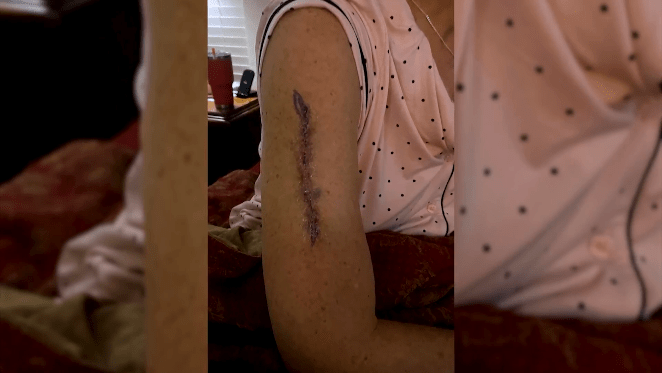
Her follow-up plan does not include chemotherapy or radiation, but it does include vigilant surveillance: dermatologist visits every three months and oncology checks every six months for the foreseeable future. She’s planning a beach trip next month and says she’ll be practical about protection this time around—sunscreen, UV sleeves and keeping shade up on the boat. “One little thing, putting sunscreen on, would have changed everything,” said Callender.
Melanoma can be a quiet, fast-moving threat, and the most useful habits are simple: cover up, lather on broad-spectrum sunscreen, photograph suspicious spots and get checked annually. If you tan easily, don’t let that false sense of safety stop you from acting—early detection makes the difference between a routine treatment and a life-changing diagnosis.