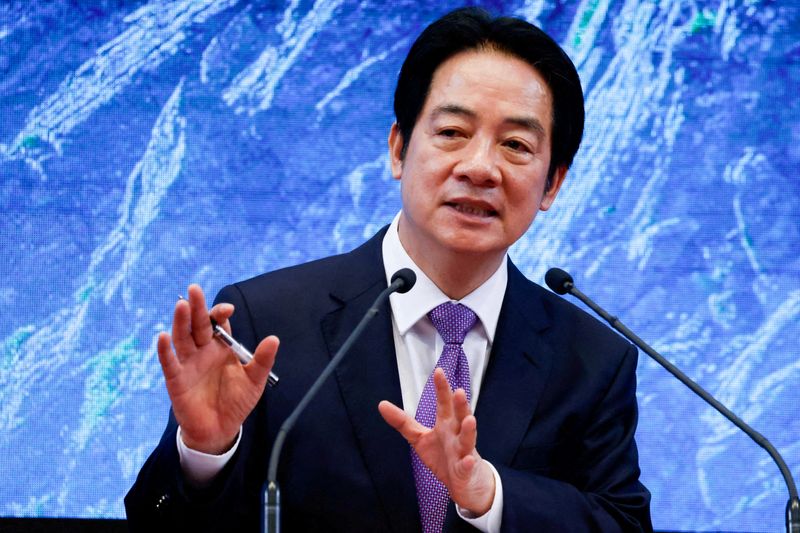
Taiwan has expressed strong disapproval of China’s decision to expel a New York Times reporter, Vivian Wang, following an interview conducted with Taiwan’s President Lai Ching-te. The expulsion, which occurred in February, was reportedly in response to a video interview with President Lai during the newspaper’s DealBook summit in December, although Wang was not directly involved in the interview.
Taiwan’s Response
In a statement, Taiwan’s presidential office, through spokesperson Karen Kuo, criticized China’s actions as an attempt to threaten media freedom and interfere with the press. Kuo emphasized that President Lai regularly engages with international media to articulate Taiwan’s stance on various issues, and such interviews are standard practice.
Kuo further stated, “China’s use of groundless pretexts and crude methods to threaten the media and interfere with press freedom not only fails to improve its international image, but also highlights that today’s China is indeed a source of instability.” She reaffirmed Taiwan’s commitment to maintaining its voice in the international community despite attempts at silencing it.
Background and Broader Context
China considers Taiwan a part of its territory and views President Lai as a separatist due to his rejection of Beijing’s sovereignty claims. Taiwan, however, maintains that its future should be determined solely by its people. The expulsion of Wang is part of a broader pattern of actions by China against foreign journalists, including the expulsion of more than a dozen journalists from U.S. media organizations in 2020.
Foreign journalists in China typically receive one-year visas that require annual renewal and can be revoked at any time. This practice has led to tensions between China and other countries, including the United States, which has also imposed restrictions on Chinese state-owned media outlets operating within its borders.
The incident underscores ongoing concerns about press freedom and the challenges faced by journalists operating in China. Taiwan’s government continues to advocate for its international presence and the right to express its perspectives without external interference.
Original reporting: Appleton, WI News Feed (HLL/CB) — read the source article.