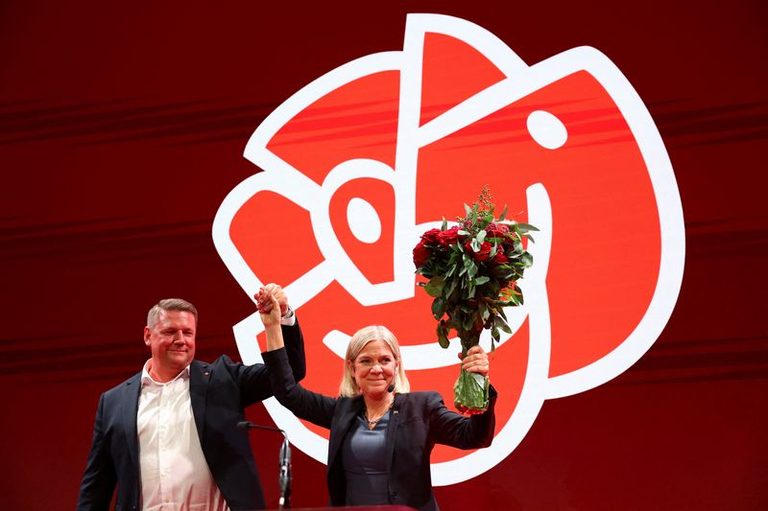
STOCKHOLM — Sweden’s centre‑left opposition parties have emerged with a slim majority in the Riksdag after the final count of Sunday’s parliamentary election. The election authority confirmed that the opposition bloc now holds 176 of the 349 seats, while the governing right‑wing coalition stands at 173 seats.
Implications for government leadership
With the numbers finalized, Social Democratic leader Magdalena Andersson is expected to be invited to form a new government, marking her return to the premiership after a four‑year period in opposition. Andersson, who previously served as prime minister from 2021 to 2022, has pledged to focus on strengthening the welfare state, supporting families, and safeguarding Sweden’s constitutional traditions.
Ruling bloc’s response
Prime Minister Ulf Kristersson, head of the Moderates Party and leader of the right‑wing coalition, has not yet issued a public comment on the final result. His government will now transition to a caretaker role while the opposition prepares to present its governing program to the Riksdag.
Election process and certification
The election authority reported that all votes for the 349‑seat parliament have been counted, though the results remain subject to formal certification in the coming days. Sweden’s electoral system, which combines proportional representation with a 4 % national threshold, ensures that parties must secure a minimum share of the vote to gain seats.
Key parties and seat distribution
- Social Democrats (centre‑left) – leading the opposition bloc
- Left Party and Green Party – allied with the Social Democrats
- Moderates Party (centre‑right) – head of the ruling coalition
- Christian Democrats, Liberals and Sweden Democrats – also part of the governing bloc
The opposition’s 176 seats give it a one‑seat advantage over the governing coalition, a margin that underscores the importance of coalition discipline and potential negotiations with smaller parties to secure a stable majority.
What this means for Swedish voters
Swedish citizens can anticipate a shift in policy direction, particularly in areas such as social welfare, education, and immigration. Andersson’s platform emphasizes increased support for families, investment in public services, and a commitment to uphold Sweden’s constitutional freedoms.
International perspective
European observers note that Sweden’s election outcome reflects a broader trend of centre‑left parties regaining influence in several parliamentary democracies. The result also highlights the resilience of Sweden’s democratic institutions, with a peaceful transfer of power expected once the new government is formally confirmed.
As the certification process concludes, political analysts will watch how the opposition coalition negotiates its agenda and whether it can maintain cohesion in a tightly balanced parliament.
Original reporting: Appleton, WI News Feed (HLL/CB) — read the source article.