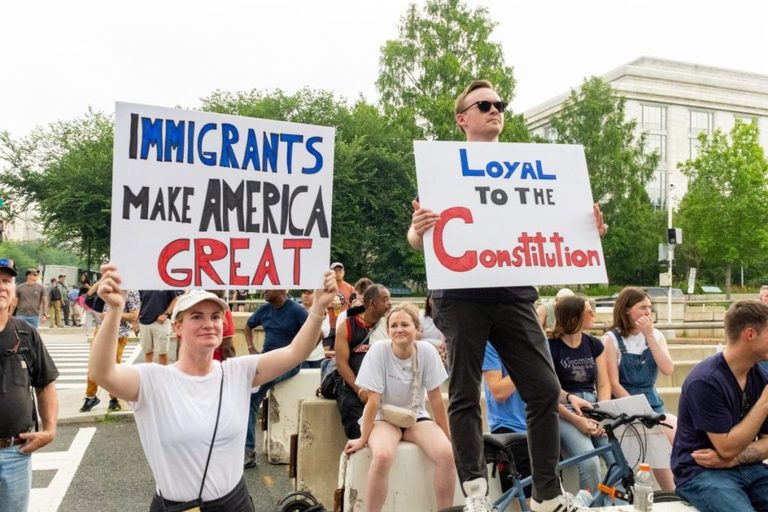
The U.S. Supreme Court has rejected President Trump’s effort to end birthright citizenship, preserving a constitutional guarantee that has defined what it means to be an American for more than 150 years. The 5-4 ruling in Trump v. Barbara struck down the president’s executive order seeking to deny automatic citizenship to children born in the United States to illegal immigrant parents, reaffirming protections rooted in the 14th Amendment.
Constitutional Protections
The birthright citizenship case rested on constitutional protections established after the Citizenship Clause of the 14th Amendment was adopted in the aftermath of the conflict to ensure that formerly enslaved Black Americans could not be denied citizenship. Over the decades, the amendment also became the constitutional foundation protecting the citizenship of virtually everyone born on U.S. soil.
Black Futures Lab Executive Director Kristin Powell said the ruling protects that legacy. “Birthright citizenship is a safeguard against exclusion, rooted in the legacy of formerly enslaved Black people who fought to ensure that citizenship could not be denied based on race, origin, or status,” Powell said. “Today’s decision preserves that legacy and pushes back against efforts to create a hierarchy of belonging in this country.”
Transgender Athletes
In a separate 6-3 decision, the court ruled that Idaho and West Virginia may enforce laws barring transgender athletes from competing on girls’ and women’s teams, concluding the bans do not violate Title IX or the Equal Protection Clause.
According to the organizations challenging the laws, 27 states have enacted bans on transgender students participating in school sports since 2020. The legal challenge argued the restrictions violated the Equal Protection Clause of the 14th Amendment, while the West Virginia case also asserted the law conflicted with Title IX, the federal statute prohibiting sex discrimination in education.
Original reporting: The Washington Informer — read the source article.