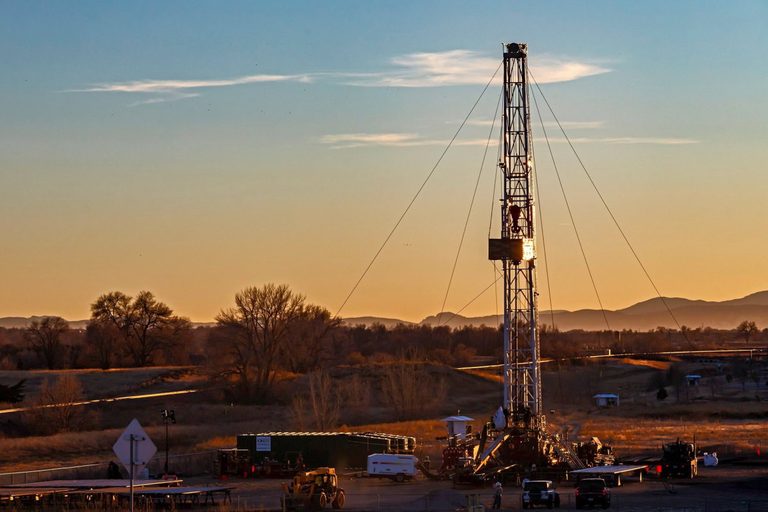
The Supreme Court is set to hear oral arguments on Monday in Suncor Energy v. Boulder, a landmark case that could determine whether cities and states may hold major oil producers accountable for damages linked to rising temperatures. The dispute pits the city of Boulder, Colorado, and its county against Exxon Mobil and Canada’s Suncor Energy, alleging that their emissions contributed to wildfires and floods that have devastated the region.
Why the case matters to Americans
Dozens of local governments across the country have filed similar suits, seeking billions of dollars in compensation. A ruling in favor of the plaintiffs could create a sweeping precedent, allowing municipalities to pursue costly lawsuits against the oil and gas industry. Conversely, a decision that upholds state‑level authority would preserve the current balance between state tort claims and federal regulatory power.
Justices to watch
Conservative justices Clarence Thomas and Neil Gorsuch have been cited repeatedly in the parties’ briefs. Both have a history of questioning whether federal law should automatically preempt state actions when Congress has not spoken directly on the issue. Their past opinions emphasize a strict reading of the Constitution and statutory text, a principle that could shape the outcome of the climate case.
Trump administration’s position
President Trump’s administration has filed amicus briefs siding with Exxon and Suncor, arguing that climate‑related regulation is fundamentally a federal matter. The administration contends that allowing each city to sue oil companies would create a chaotic patchwork of state‑specific rules, undermining a uniform national approach to energy policy.
Arguments from both sides
Representatives for Boulder argue that the oil companies not only contributed to the disasters but also misled the public about the risks of their emissions. They maintain that the lawsuits seek only a fair share of local costs caused by the companies’ alleged tortious conduct.
Exxon and Suncor counter that climate‑impact regulation falls under federal jurisdiction because emissions cross state lines. They warn that the lawsuits amount to an indirect “carbon tax” that could bankrupt the energy sector.
Potential outcomes
If the Court reaches a 4‑4 split, the lower‑court decision allowing the case to proceed would stand, preserving Boulder’s ability to sue. The Court could also remand the case to state courts for further fact‑finding, likely sending it back to the Supreme Court in the future.
Broader legal context
Justice Thomas recently authored a decision rejecting a claim that federal interests automatically preempted a state tort claim by an Army specialist injured in Afghanistan. That opinion underscored the need for a clear constitutional or statutory basis before federal law can displace state law—a point that aligns with the arguments being made in the climate case.
Legal scholars note that the preemption doctrine applied by Thomas and Gorsuch is a well‑established principle, not a partisan invention. As former clerk John Yoo explained, the question is whether the Framers or Congress intended federal law to dominate in a particular arena.
What’s next for Colorado and the nation
The arguments scheduled for Monday will be closely watched by city leaders, energy companies, and policymakers nationwide. A decision that limits state‑level climate litigation could preserve the current regulatory framework favored by the Trump administration, while a ruling that expands state authority could reshape the legal landscape for environmental accountability.
Original reporting: KTVZ (Central Oregon) — read the source article.