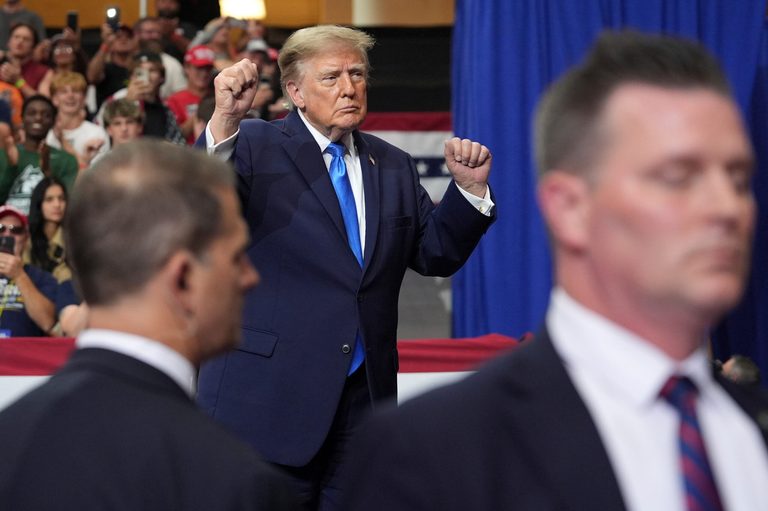
President Donald Trump is set to visit Grand Island, Nebraska, on Monday as part of a 32‑day rally tour aimed at shoring up Republican candidates ahead of the November 3 midterm elections. He will share the stage with Sen. Pete Ricketts, the former governor who is seeking his first full six‑year term in the U.S. Senate.
Ricketts’ Senate bid and independent challenger
Ricketts, who was appointed to fill Sen. Ben Sasse’s seat in 2023 and later won a special election, now faces independent Dan Osborn. Osborn, a former labor‑union leader who lost a 2024 Senate race to Sen. Deb Fischer by seven points, is being backed by national Democrats but has not disclosed which party he would caucus with if elected.
The race, once considered non‑competitive, has drawn attention from both parties as a potential bellwether in a traditionally conservative state. While the Democratic nominee, Cindy Burbank, withdrew to avoid splitting the anti‑Republican vote, the contest remains a focal point for national strategists.
Beef‑import proposal sparks local backlash
At the same time, the Trump administration’s proposal to increase imports of foreign beef has ignited criticism from Nebraska’s ranching community. Ricketts warned that “the plan to import low‑quality foreign beef is not helping Nebraska ranchers,” urging the White House to consider longer‑term measures that would expand herd sizes and ultimately lower consumer prices.
Trump argues that allowing more beef imports will reduce grocery bills for families, a message aimed at rural voters who have historically supported the president but are concerned about rising fuel and food costs.
Broader political landscape
Nebraska’s congressional delegation includes Republican Rep. Adrian Smith, whose seat is not expected to be contested, and a competitive House race in Omaha that often leans Democratic. The state’s political climate reflects a broader national trend: the Democratic brand remains unpopular in many conservative regions, prompting independent candidates to emerge as viable alternatives to traditional party nominees.
In neighboring states, independents are also challenging Republican incumbents, such as Navy veteran Brian Bengs in South Dakota and Todd Achilles in Idaho, underscoring a growing appetite for non‑partisan options among voters dissatisfied with the two‑party system.
What’s at stake
The upcoming Senate race will test the Trump administration’s ability to mobilize its base in the Midwest while navigating local economic concerns. Ranchers’ opposition to the beef‑import plan highlights the tension between national policy goals and the livelihoods of family‑run farms that form the backbone of Nebraska’s economy.
As the campaign trail moves westward, Trump’s next stop will be a rally in San Antonio, Texas, continuing the push to secure Republican victories in key swing and solid‑red states.
Original reporting: Alexandria, VA News – WTOP News — read the source article.