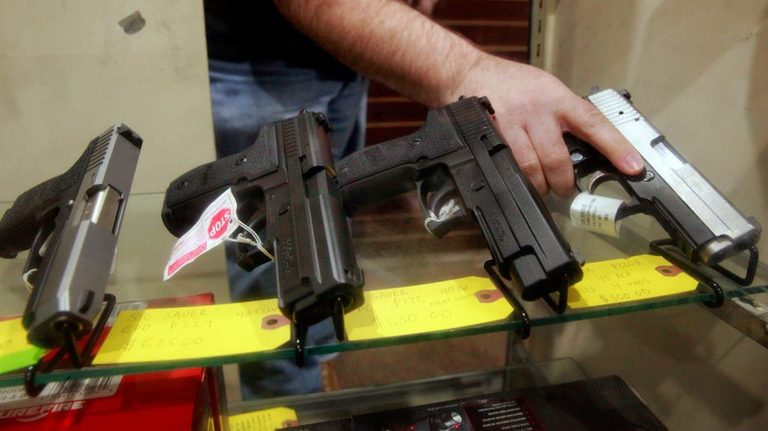
The Supreme Court has handed a major victory to pro-Second Amendment advocates by striking down Hawaii’s private-property concealed-carry restriction. In a 6-3 decision in Wolford v. Lopez, the Court held that Hawaii cannot require licensed gun owners to obtain express permission before carrying semi-automatic rifles onto private property open to the public.
Background of the Case
The case began when gun-rights challengers dubbed the policy the ‘vampire rule’ because lawful gun owners had to be ‘invited in’ before entering businesses while armed. Attorney Kevin O’Grady, who represented the plaintiffs, criticized the state’s reliance on a Reconstruction-era Black Code to defend the law, calling it ‘disgraceful’.
The Supreme Court’s decision rejected Hawaii’s argument that the law was justified under the Court’s 2022 decision in New York State Rifle & Pistol Association v. Bruen. Justice Samuel Alito, writing for the majority, called the Louisiana statute a ‘tainted artifact’ that was enacted to disarm newly freed Black Americans and leave them defenseless after the Civil War.
Reaction to the Decision
Justice Ketanji Brown Jackson argued in her dissent that the Court should have first decided whether the Louisiana law itself violated the Second Amendment, or whether the real constitutional problem was that it was enforced in a racially discriminatory way. However, her reasoning was met with criticism from gun-rights advocates, who argued that the Fourteenth Amendment was passed in response to laws like the Black Codes that denied newly freed Black Americans their constitutional rights.
Original reporting: Fox News (HLL/CB) — read the source article.